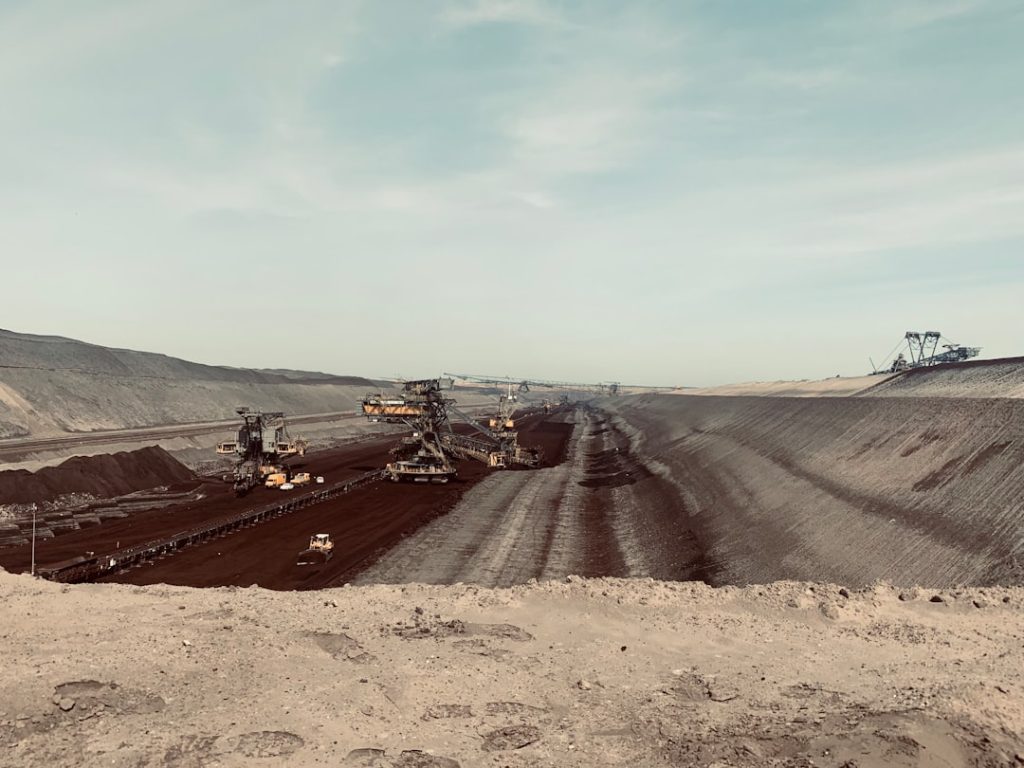
The lithium industry stands at a pivotal crossroads as traditional brine extraction methods face unprecedented competition from an unexpected challenger. Hard rock mining expansion has emerged as the dominant force reshaping global lithium production, fundamentally altering supply chains, pricing dynamics, and the geographic distribution of this critical battery metal.
For decades, lithium production remained concentrated in South America’s “lithium triangle,” where companies extracted the metal from salt flats through lengthy evaporation processes. This method, while cost-effective in regions like Chile’s Atacama Desert, required extensive time commitments and remained vulnerable to weather disruptions and water scarcity concerns. Today’s hard rock mining expansion represents a seismic shift toward more predictable, scalable production methods that can meet soaring global demand.
Australia has positioned itself at the forefront of this transformation, with companies like Pilbara Minerals and Mineral Resources dramatically scaling their spodumene operations. These hard rock mining facilities can process lithium-bearing ore within months rather than the 12-18 month timelines associated with brine evaporation. The speed advantage has proven crucial as electric vehicle manufacturers demand more reliable supply chain partnerships to support their aggressive production targets.
The technical advantages driving hard rock mining expansion extend beyond processing speed. Unlike brine operations that depend on specific climatic conditions and geological formations, hard rock mining can operate in diverse environments with consistent output levels. Mining companies can extract spodumene concentrate with lithium content exceeding 6%, significantly higher than typical brine concentrations of 0.1-0.2%. This concentration differential translates into more efficient transportation and processing economics, particularly for markets distant from traditional brine production centers.
Investment flows have followed this operational shift, with global capital increasingly favoring hard rock projects over new brine developments. Major mining corporations including Albemarle, Livent, and Ganfeng Lithium have allocated billions toward acquiring and developing spodumene resources across Australia, Canada, and emerging African markets. The hard rock mining expansion has attracted institutional investors seeking exposure to lithium production with greater operational predictability and shorter payback periods.
Environmental considerations have also influenced this transition, though the picture remains complex. While hard rock mining operations generate more immediate environmental impact through excavation and processing, they typically require less water than brine extraction and can be rehabilitated more effectively post-mining. Environmental regulators in water-stressed regions have begun favoring projects that minimize long-term water consumption, inadvertently accelerating hard rock mining expansion in jurisdictions where water resources face increasing pressure.
Downstream processing capabilities have evolved to accommodate this shift in raw material sourcing. Chinese refiners, who process approximately 60% of global lithium supply, have invested heavily in spodumene conversion facilities to complement their existing brine processing infrastructure. Companies like Tianqi Lithium and Ganfeng have established integrated supply chains connecting Australian hard rock operations directly to Chinese battery chemical production, bypassing traditional brine-dominated supply routes.
The geopolitical implications of hard rock mining expansion cannot be understated. Countries previously dependent on South American lithium imports have prioritized developing domestic hard rock resources to enhance supply chain security. Canada’s critical minerals strategy specifically targets lithium-bearing pegmatites across Quebec and Ontario, while European nations have accelerated permitting for projects in Finland, Portugal, and the Czech Republic. This geographic diversification reduces concentration risk that previously characterized global lithium supply.
Pricing dynamics have shifted accordingly, with spodumene concentrate prices often trading at premiums to lithium carbonate equivalent from brine sources. The premium reflects both superior processing characteristics and supply chain reliability that downstream buyers increasingly value. Market participants expect this pricing relationship to persist as battery manufacturers prioritize supply security over marginal cost savings.
Technology developments continue advancing hard rock mining efficiency, with innovations in ore sorting, flotation chemistry, and hydrometallurgical processing reducing operational costs while improving recovery rates. Companies are achieving lithium recoveries exceeding 80% from spodumene concentrate, approaching the theoretical maximum and surpassing many brine operations where recovery rates vary significantly based on brine chemistry and processing conditions.
The momentum behind hard rock mining expansion appears irreversible as the lithium industry matures beyond its experimental phase into industrial-scale production. While brine operations will remain relevant, particularly in established South American markets, the flexibility, scalability, and reliability of hard rock mining positions this method as the primary growth vector for global lithium supply. Companies and investors who recognize this fundamental shift early will likely capture disproportionate value as the electric vehicle revolution demands unprecedented quantities of this essential battery metal.
