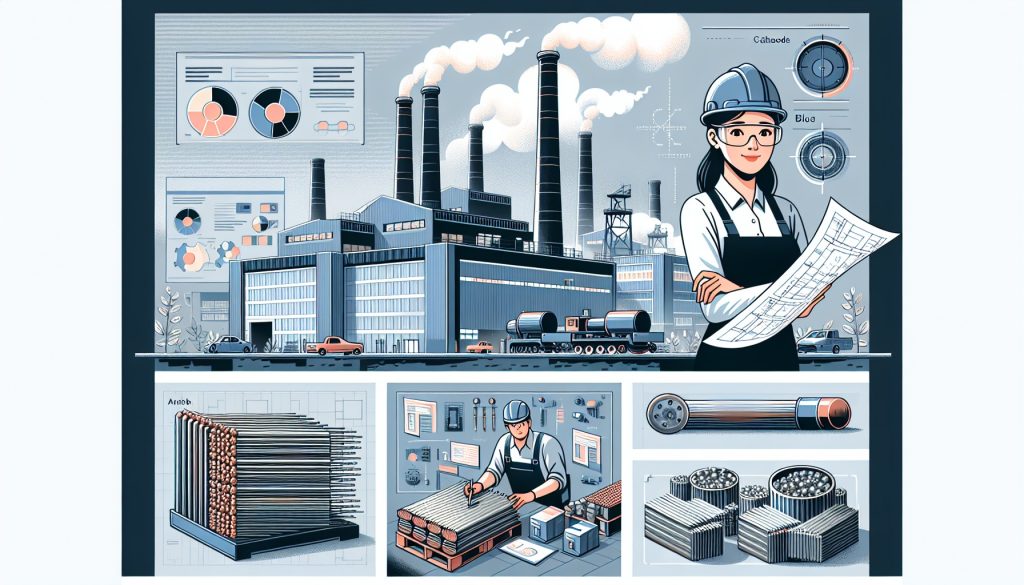
The battery manufacturing landscape has evolved into a complex web of interdependent relationships, where success hinges on securing reliable access to critical materials. Among these relationships, cathode manufacturer offtake agreements have emerged as the cornerstone of sustainable battery production, fundamentally reshaping how manufacturers approach supply chain strategy and long-term planning.
Cathode materials represent the single most expensive component in lithium-ion batteries, typically accounting for 40-50% of total cell costs. This reality places enormous pressure on battery manufacturers to establish predictable supply chains that can deliver consistent quality while managing price volatility. A cathode manufacturer offtake agreement serves as the strategic bridge between raw material uncertainty and manufacturing stability, creating a contractual framework that benefits both parties through guaranteed supply and demand commitments.
The financial implications of these agreements extend far beyond simple procurement. Battery manufacturers who secure cathode manufacturer offtake deals often gain access to preferential pricing structures that reflect long-term volume commitments. These arrangements typically include price escalation mechanisms tied to raw material indices, providing manufacturers with cost predictability that enables more accurate financial forecasting and competitive pricing strategies. Major battery producers have reported achieving 15-25% cost reductions through strategic offtake partnerships compared to spot market purchasing.
Quality assurance represents another critical dimension where cathode manufacturer offtake agreements deliver substantial value. These partnerships enable battery manufacturers to work closely with cathode producers during the development phase, ensuring that material specifications align precisely with their cell chemistry requirements. This collaborative approach reduces the risk of quality issues, improves energy density optimization, and accelerates time-to-market for new battery technologies. The result is a more robust supply chain that can adapt to evolving technical requirements while maintaining consistency across production batches.
Strategic Advantages Beyond Cost and Quality
The strategic benefits of cathode manufacturer offtake extend into capacity planning and market positioning. Battery manufacturers operating under these agreements gain visibility into their suppliers’ expansion plans and production schedules, enabling them to scale their own operations with confidence. This forward-looking perspective is particularly valuable in rapidly growing markets such as electric vehicles and energy storage, where demand can outstrip supply capacity if not properly anticipated.
Geographic diversification through cathode manufacturer offtake agreements has become increasingly important as manufacturers seek to reduce geopolitical risks and comply with evolving regulations around supply chain transparency. Leading battery producers are now structuring offtake deals with multiple cathode manufacturers across different regions, creating resilient supply networks that can withstand disruptions while meeting local content requirements in key markets.
The negotiation dynamics surrounding cathode manufacturer offtake have also evolved to include technology sharing and joint development initiatives. These agreements often incorporate provisions for collaborative research and development, allowing both parties to benefit from innovations in cathode chemistry, manufacturing processes, and recycling technologies. Such partnerships have accelerated the development of next-generation materials, including high-nickel cathodes and cobalt-free alternatives that address both performance and sustainability concerns.
Risk mitigation through cathode manufacturer offtake extends beyond supply security to encompass environmental and social governance considerations. These agreements increasingly include sustainability metrics, recycled content requirements, and ethical sourcing standards that help battery manufacturers meet their corporate responsibility objectives while ensuring compliance with emerging regulations. The ability to trace materials back to their source through established offtake relationships has become a competitive advantage in markets where transparency is valued by end customers.
Market Evolution and Future Outlook
The structure and terms of cathode manufacturer offtake agreements continue to evolve as the battery industry matures. Recent trends show increasing flexibility in volume commitments, with agreements incorporating demand variability clauses that reflect the cyclical nature of end markets. This evolution recognizes that rigid long-term contracts may not serve either party’s interests in a rapidly changing technological landscape.
Innovation cycles are also influencing how cathode manufacturer offtake agreements are structured, with provisions for technology transitions and material upgrades becoming standard. Battery manufacturers are negotiating terms that allow them to access new cathode chemistries as they become commercially viable, ensuring their supply agreements support rather than constrain their technological evolution.
The integration of recycling into cathode manufacturer offtake represents an emerging trend that addresses both supply security and sustainability objectives. Forward-thinking agreements now include provisions for closed-loop material flows, where cathode manufacturers commit to processing recycled materials from the battery manufacturer’s end-of-life products, creating circular supply chains that reduce dependence on virgin raw materials.
As the battery industry continues its rapid expansion, cathode manufacturer offtake agreements will remain the foundation upon which sustainable manufacturing operations are built. These strategic partnerships provide the stability, predictability, and collaborative framework necessary for battery manufacturers to compete effectively while building resilient supply chains capable of supporting long-term growth. The companies that master these relationships will be best positioned to capitalize on the ongoing energy transition and establish lasting competitive advantages in the global battery market.
