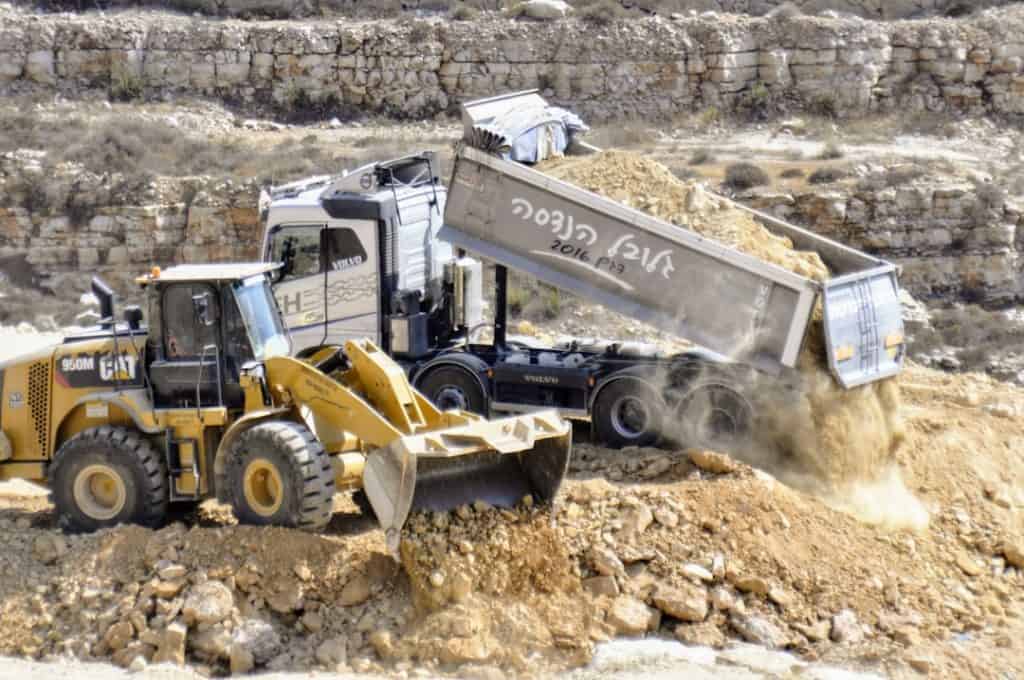
The lithium market is experiencing a seismic shift as mining companies worldwide accelerate their hard rock mining expansion projects to meet unprecedented demand. With electric vehicle sales continuing their exponential growth trajectory and energy storage systems becoming critical infrastructure, the race to secure reliable lithium supplies has never been more intense. Unlike brine extraction methods that can take years to reach full production, hard rock mining operations offer faster deployment and more predictable output, making them increasingly attractive to investors and manufacturers alike.
Major Players Driving Hard Rock Mining Expansion
Industry leaders are committing billions to hard rock mining expansion projects across strategic locations. Australia’s Pilbara Minerals recently announced a $2.8 billion investment to triple their spodumene production capacity, while Canada’s Patriot Battery Metals is fast-tracking development of their Quebec lithium district. These expansions represent a fundamental shift in how the industry approaches supply chain security, with companies choosing the higher upfront costs of hard rock operations over the weather-dependent risks of South American brine operations.
The strategic advantage becomes clear when examining production timelines. Hard rock mining expansion projects typically achieve commercial production within 18-24 months of breaking ground, compared to 3-5 years for equivalent brine operations. This speed-to-market capability has attracted partnerships with major automakers seeking to secure their battery supply chains.
Technological Breakthroughs Reducing Extraction Costs
Recent innovations in lithium extraction technology are making hard rock mining expansion increasingly cost-competitive. Advanced flotation techniques and automated sorting systems have reduced processing costs by up to 30% since early adoption phases. Companies like Sigma Lithium are implementing AI-driven ore sorting that identifies high-grade spodumene with 95% accuracy, significantly improving concentrate quality while reducing waste.
Direct lithium extraction (DLE) technology integration is another game-changer for hard rock operations. While traditionally associated with brine processing, adapted DLE systems are now being deployed at hard rock sites to recover lithium from processing water and tailings, boosting overall recovery rates to exceed 85% in optimal conditions.
Market Economics Favoring Hard Rock Operations
The economics supporting hard rock mining expansion have strengthened considerably as lithium carbonate prices stabilize above $15,000 per ton. Production costs for established hard rock operations now average $4,500-6,500 per ton, creating substantial profit margins even during market corrections. This economic resilience has attracted institutional investors who previously favored lower-risk commodity investments.
Supply chain considerations further enhance the hard rock advantage. Processing facilities can be constructed closer to mining sites, reducing transportation costs and logistics complexity. Additionally, the consistent chemical composition of hard rock concentrates simplifies downstream processing for battery manufacturers, often commanding premium pricing over variable-quality brine products.
Regional Hotspots for New Mining Development
North America is emerging as the epicenter of hard rock mining expansion, driven by government incentives and proximity to growing battery manufacturing hubs. The Inflation Reduction Act’s domestic content requirements have accelerated development timelines across projects in Nevada, North Carolina, and Quebec. These regions offer political stability, established mining infrastructure, and skilled workforces that reduce project execution risks.
Africa’s lithium triangle, encompassing deposits in Mali, Ghana, and Burkina Faso, represents another frontier for expansion. Despite infrastructure challenges, the exceptional ore grades—often exceeding 2% lithium oxide—justify the additional development costs. Several junior miners are advancing feasibility studies that could bring multiple new hard rock operations online within the next three years.
Environmental and Regulatory Considerations
Hard rock mining expansion faces increasing scrutiny over environmental impact, particularly regarding water usage and community displacement. However, modern operations are implementing closed-loop water systems and biodiversity offset programs that address many traditional concerns. Regulatory frameworks are evolving to support responsible expansion while maintaining environmental standards.
The permitting process for new hard rock projects has streamlined in key jurisdictions, with fast-track approval processes for projects meeting specific sustainability criteria. This regulatory support, combined with public acceptance of lithium mining’s role in energy transition, creates a favorable environment for continued expansion.
Future Outlook and Investment Implications
Market analysts project that hard rock mining expansion will account for 65% of new lithium supply additions through the end of the decade. This shift toward hard rock dominance reflects not just economic factors, but strategic considerations around supply security and production reliability that are increasingly valued by end-users.
For investors, the hard rock mining expansion trend offers multiple entry points, from established producers scaling operations to exploration companies with advanced-stage projects. The key differentiators include resource quality, infrastructure access, and management execution capability in bringing projects from development to commercial production.
The lithium market’s evolution toward hard rock mining expansion represents more than just a shift in extraction methods—it signals a maturing industry prioritizing reliability and scalability. As global lithium demand continues its upward trajectory, companies that successfully execute hard rock expansion strategies will likely capture disproportionate value in the emerging energy economy. Stay informed about the latest developments in lithium mining and market trends by following industry reports and company announcements that could signal the next major supply chain developments.
