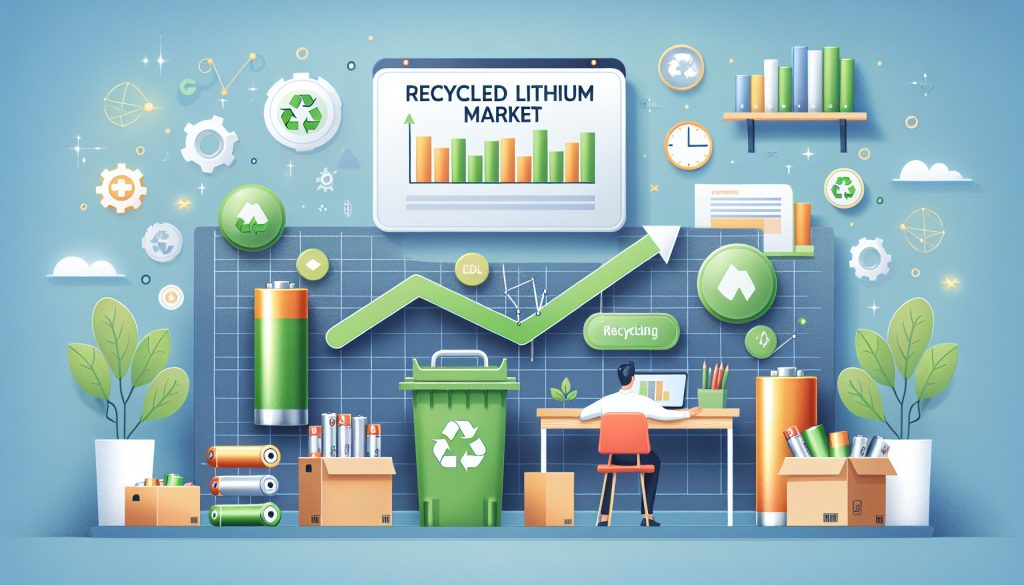
As global clean energy adoption accelerates, a critical supply chain transformation is quietly reshaping the battery industry. The recycled lithium market has emerged as a pivotal force in addressing both environmental concerns and raw material shortages, fundamentally altering how manufacturers approach battery production economics.
Traditional lithium mining faces mounting challenges—from environmental regulations to geopolitical tensions affecting major producing regions. This perfect storm has created unprecedented opportunities for lithium recycling technologies, with industry analysts projecting the recycled lithium market to reach $2.8 billion by 2030, representing a compound annual growth rate exceeding 23%.
Battery Waste Creates Unprecedented Recovery Opportunities
The exponential growth in electric vehicle adoption and energy storage systems has generated a mounting wave of end-of-life batteries requiring disposal. Rather than viewing this as a waste problem, forward-thinking companies are recognizing these batteries as urban mines containing valuable lithium reserves.
Current recycling technologies can recover up to 95% of lithium from spent batteries, making the recycled lithium market increasingly cost-competitive with traditional extraction methods. Major automotive manufacturers, including Tesla and BMW, have established strategic partnerships with recycling facilities to secure secondary lithium supplies, reducing their dependence on volatile mining markets.
The economics are compelling: recycled lithium typically requires 75% less energy to produce compared to virgin material extraction, while generating significantly lower carbon emissions—a critical factor as manufacturers face stricter sustainability mandates.
Technological Breakthroughs Drive Market Expansion
Recent advances in hydrometallurgical and direct recycling processes have dramatically improved recovery rates and reduced processing costs. Companies like Redwood Materials and Li-Cycle have pioneered closed-loop systems that can process mixed battery chemistries, extracting high-purity lithium suitable for new battery manufacturing.
These technological improvements have attracted substantial venture capital investment, with the recycled lithium market receiving over $1.2 billion in funding over the past 18 months. Breakthrough innovations include AI-powered sorting systems that can identify battery types with 99.7% accuracy and novel solvent extraction techniques that minimize chemical waste.
The development of portable recycling units is particularly significant, enabling on-site processing at automotive dealerships and electronics retailers. This distributed approach reduces transportation costs while improving collection rates from consumer electronics.
Regulatory Momentum Accelerates Market Growth
Government policies worldwide are creating powerful tailwinds for recycled lithium adoption. The European Union’s Battery Regulation requires 6% recycled lithium content in new batteries by 2030, rising to 12% by 2035. Similar mandates are under consideration in California and several Asian markets.
China, the world’s largest battery manufacturer, has implemented extended producer responsibility programs that require battery manufacturers to fund recycling infrastructure. These policies are driving massive investments in recycling capacity, with Chinese companies planning to add 400,000 tons of annual lithium recycling capacity by 2028.
Tax incentives further enhance the economics, with recycling operations eligible for clean energy credits worth up to $500 per ton of processed material in several jurisdictions.
Supply Chain Security Drives Corporate Investment
Geopolitical tensions surrounding traditional lithium sources have made supply chain diversification a strategic priority for major manufacturers. The recycled lithium market offers domestic sourcing alternatives that reduce import dependencies and price volatility exposure.
Ford has committed $20 billion to secure alternative lithium sources, with recycling partnerships representing 30% of this investment. Similarly, Panasonic has established recycling joint ventures across three continents to ensure steady material flows for its gigafactory operations.
The circular economy benefits extend beyond raw material security—companies participating in battery recycling programs report improved brand perception and easier access to ESG-focused investment capital.
The recycled lithium market represents far more than an environmental initiative—it’s becoming a cornerstone of clean energy infrastructure resilience. As battery demand continues its meteoric rise and regulatory pressure intensifies, recycled lithium is transitioning from alternative supply to mainstream necessity. Companies that establish recycling capabilities today are positioning themselves advantageously in tomorrow’s circular battery economy, where waste becomes the foundation for sustainable growth.