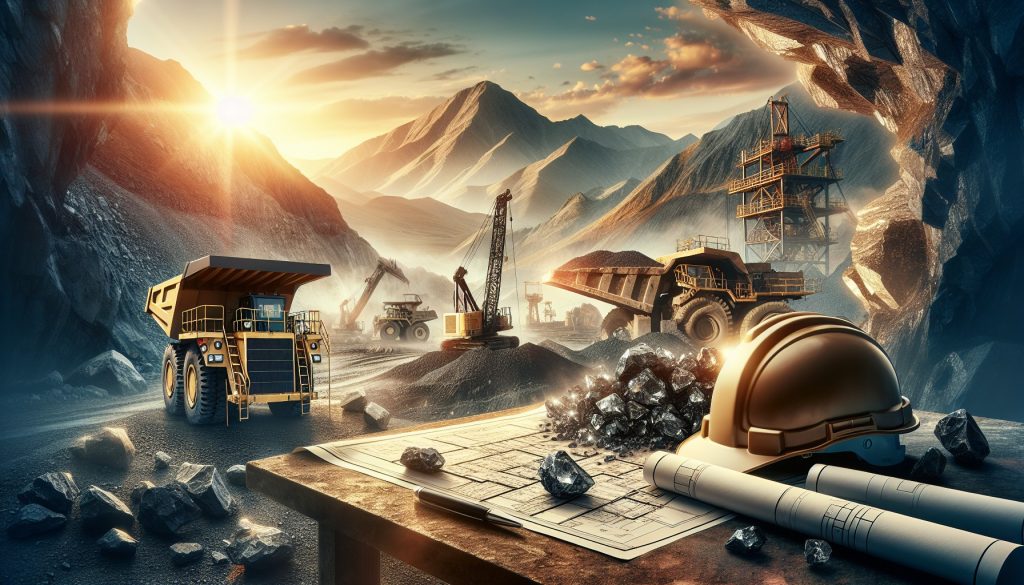
The global lithium market is experiencing an unprecedented transformation, and at its center lies a pivotal shift that’s capturing the attention of investors worldwide. While brine extraction has traditionally dominated lithium production, hard rock mining expansion is emerging as the strategic answer to surging demand that traditional methods simply cannot meet.
The numbers tell a compelling story. Global lithium demand has reached 1.2 million metric tons annually, driven primarily by the electric vehicle revolution and energy storage requirements. This represents a staggering 340% increase from just five years ago. What makes this surge particularly significant for investors is that brine operations, which account for roughly 70% of current production, face inherent limitations in scaling quickly enough to meet this explosive demand.
Hard rock mining expansion offers a fundamentally different value proposition. Unlike brine extraction, which can take 12-18 months to yield lithium carbonate through evaporation processes, hard rock mining operations can process spodumene ore and produce lithium concentrates within days. This speed advantage becomes crucial when manufacturers are scrambling to secure supply chains for battery production.
The geographic distribution of hard rock lithium resources also presents compelling investment dynamics. While South America’s lithium triangle dominates brine production, hard rock deposits are more widely distributed across Australia, Canada, and parts of Africa. This geographical diversification reduces supply chain risks that have become increasingly important to automotive manufacturers and battery producers seeking stability in their sourcing strategies.
Investment capital is flowing accordingly. Mining companies focused on hard rock mining expansion have attracted over $18 billion in funding commitments, with major projects in Western Australia and Quebec leading the charge. These investments aren’t just about expanding existing operations; they represent a fundamental shift in how the industry approaches lithium extraction to meet long-term demand projections.
The operational advantages extend beyond speed and geography. Hard rock mining expansion projects typically offer more predictable production schedules and aren’t subject to the weather dependencies that can affect brine evaporation rates. This operational reliability translates into more stable revenue projections, a factor that institutional investors find particularly attractive when evaluating long-term commodity plays.
Technology improvements are amplifying these advantages. Advanced processing techniques have reduced the cost differential between hard rock and brine extraction to less than $2,000 per metric ton of lithium carbonate equivalent. When combined with the premium that buyers are willing to pay for reliable, fast delivery, many hard rock operations now enjoy superior margins compared to their brine-based counterparts.
The strategic implications reach beyond simple supply and demand mathematics. Automotive giants including Tesla, Ford, and General Motors have begun signing direct offtake agreements with hard rock mining operations, effectively bypassing traditional commodity markets. These agreements often include upfront payments and guaranteed pricing structures that provide mining companies with the capital and certainty needed to accelerate expansion plans.
Environmental considerations are also reshaping investor sentiment. While mining operations face their own environmental challenges, hard rock mining expansion projects increasingly incorporate advanced environmental management systems and rehabilitation plans. Some operations are achieving carbon neutrality through renewable energy integration, addressing ESG concerns that have become central to institutional investment decisions.
Market analysts project that hard rock mining expansion will increase its share of global lithium production from the current 30% to approximately 45% within the next three years. This shift represents not just a change in production methods, but a fundamental realignment of market power toward operations that can deliver reliability, speed, and scale simultaneously.
For investors tracking the lithium story, hard rock mining expansion represents more than just another commodity play. It’s a strategic positioning opportunity in a market where traditional supply sources are proving inadequate for the demands of the electric future. As the gap between lithium demand and traditional supply continues to widen, the companies executing successful hard rock mining expansion strategies are positioning themselves at the center of one of the most critical supply chains of the energy transition.