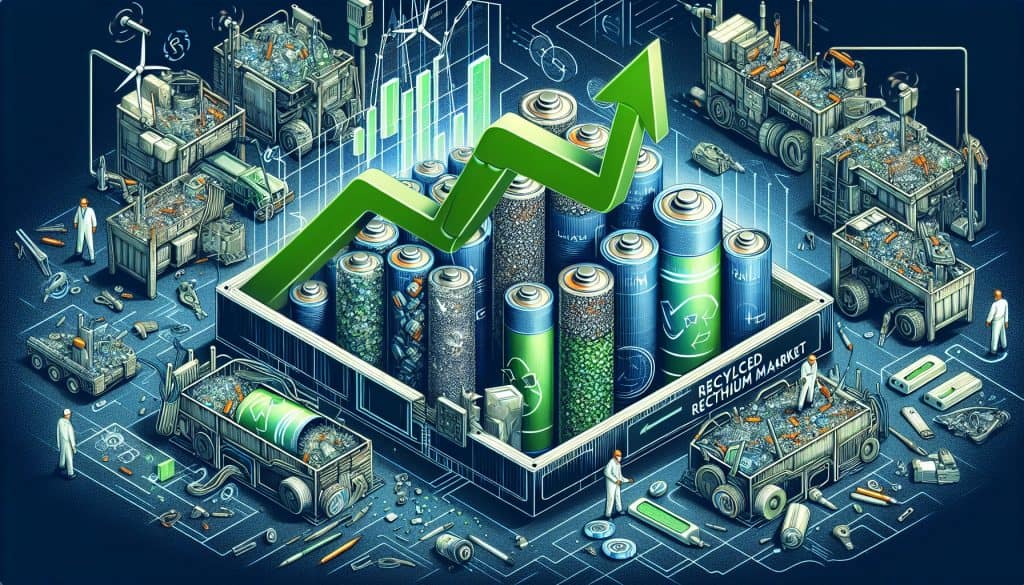
The global shift toward sustainable energy has created an unexpected goldmine in what was once considered industrial waste. As electric vehicle sales surge and renewable energy storage demands skyrocket, the recycled lithium market has emerged as one of the most compelling investment opportunities in the clean technology sector. With lithium prices experiencing unprecedented volatility and supply chain concerns mounting, recycled lithium offers a strategic solution that addresses both environmental responsibility and economic necessity.
Industry analysts project the recycled lithium market will reach $4.2 billion by 2030, representing a compound annual growth rate of 18.6%. This explosive growth stems from multiple converging factors: depleting primary lithium reserves, stricter environmental regulations, and the increasing volume of end-of-life batteries requiring processing. Major automotive manufacturers including Tesla, BMW, and General Motors have already committed to incorporating recycled lithium into their supply chains, signaling a fundamental shift in how the industry approaches raw material sourcing.
Market Dynamics Reshaping Lithium Supply Chains
Traditional lithium extraction methods face mounting challenges that make recycled alternatives increasingly attractive. Primary lithium production requires extensive water usage—approximately 500,000 gallons per ton of lithium—creating environmental concerns in already water-stressed regions like Chile’s Atacama Desert. The recycled lithium market offers a compelling alternative, requiring 75% less energy and producing 80% fewer carbon emissions compared to traditional mining operations.
Supply chain disruptions have further accelerated adoption of recycled lithium sources. Geopolitical tensions in lithium-rich regions, coupled with lengthy permitting processes for new mines, have created supply bottlenecks that recycling facilities can help alleviate. Current recycling technologies can recover up to 95% of lithium from spent batteries, making the economics increasingly favorable as processing volumes scale.
Technology Breakthroughs Drive Processing Efficiency
Recent technological advances have revolutionized lithium battery recycling capabilities, transforming the economic viability of the recycled lithium market. Direct recycling methods now preserve the crystal structure of cathode materials, allowing recovered lithium to match virgin material performance while reducing processing costs by up to 40%.
Hydrometallurgical processes have achieved remarkable efficiency gains, with leading companies like Redwood Materials and Li-Cycle reporting lithium recovery rates exceeding 95%. These improvements have attracted significant venture capital investment, with over $1.8 billion flowing into battery recycling startups in the past two years. Advanced sorting technologies using artificial intelligence can now identify and separate different battery chemistries with 99% accuracy, maximizing recovery yields and minimizing contamination.
Pyrometallurgical innovations have also enhanced the recycled lithium market outlook. New furnace designs operate at lower temperatures while achieving higher throughput, reducing energy costs and environmental impact. Integration of plasma technology allows processors to handle mixed battery streams more effectively, addressing one of the industry’s primary logistical challenges.
Investment Landscape and Market Opportunities
The investment thesis for the recycled lithium market extends beyond environmental benefits to compelling financial returns. Recycled lithium typically trades at a 15-20% discount to mined lithium while offering superior supply chain reliability and lower price volatility. This pricing advantage, combined with growing regulatory support, has attracted institutional investors seeking exposure to the circular economy theme.
Government incentives are accelerating market development across major economies. The European Union’s Battery Regulation mandates minimum recycled content requirements, while China has implemented extended producer responsibility frameworks that make manufacturers liable for battery end-of-life processing. The U.S. Inflation Reduction Act provides tax credits for domestic battery recycling operations, further improving project economics.
Public-private partnerships are emerging as a key investment vehicle, with governments co-investing in recycling infrastructure to reduce dependence on imported lithium. Australia’s $50 million Critical Minerals Processing Initiative and Canada’s $964 million Strategic Innovation Fund both prioritize battery recycling projects, creating attractive risk-adjusted returns for private investors.
Future Outlook and Strategic Considerations
Market projections indicate the recycled lithium market will capture an increasing share of total lithium demand as battery waste volumes multiply. By 2035, analysts expect recycled sources to supply approximately 35% of global lithium demand, up from just 5% currently. This transformation reflects both the mathematical inevitability of growing battery waste streams and the improving economics of recycling operations.
Strategic partnerships between automakers, battery manufacturers, and recycling companies are becoming essential for securing long-term supply agreements. Vertical integration strategies are gaining favor, with several major battery producers acquiring recycling capabilities to control their entire value chain. These developments suggest the recycled lithium market will consolidate around technologically sophisticated players with established customer relationships.
The convergence of environmental necessity, technological capability, and economic opportunity positions the recycled lithium market as a cornerstone of the sustainable energy transition. As battery production scales globally and waste streams mature, recycled lithium will evolve from an alternative source to an essential component of energy security. Investors recognizing this shift early stand to benefit from what may prove to be one of the defining industrial transformations of the decade.