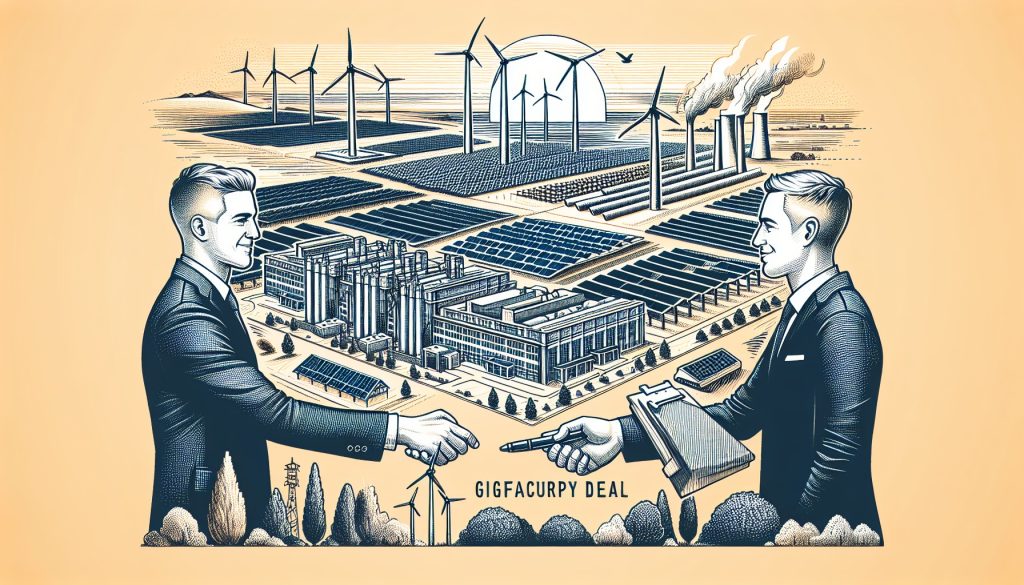
The global energy transition has reached a critical inflection point, with record-breaking gigafactory supply deals fundamentally reshaping investment opportunities across the green energy and lithium sectors. These massive manufacturing agreements are no longer just industrial contracts—they represent the backbone of a $2.8 trillion clean energy economy that’s transforming how investors approach sustainable technology investments.
A typical gigafactory supply deal today involves multi-billion dollar commitments spanning 10-15 years, creating unprecedented visibility for upstream suppliers and downstream manufacturers. Tesla’s recent partnerships with lithium producers in Australia and South America exemplify this trend, with individual agreements valued at over $3 billion annually. These deals provide the certainty needed for mining companies to justify massive capital expenditures while guaranteeing battery manufacturers the raw materials essential for meeting surging electric vehicle demand.
The ripple effects of these gigafactory supply deals extend far beyond the immediate parties involved. Lithium prices, which experienced extreme volatility between 2021 and 2024, have begun stabilizing as long-term contracts provide market predictability. This stability is attracting institutional investors who previously viewed lithium investments as too speculative. Major pension funds and sovereign wealth funds are now allocating significant capital to lithium mining projects backed by gigafactory supply agreements.
Geographic diversification has become a critical component of modern gigafactory supply deal strategies. Companies are deliberately spreading their supplier networks across multiple continents to reduce geopolitical risks and ensure supply chain resilience. North American lithium projects, particularly those in Nevada and Quebec, command premium valuations due to their proximity to major gigafactory clusters and favorable regulatory environments. These regional advantages translate directly into more favorable gigafactory supply deal terms and higher investor returns.
The financial structuring of gigafactory supply deals has evolved considerably, incorporating sophisticated pricing mechanisms that balance risk between buyers and sellers. Many agreements now feature floor prices that protect mining companies during market downturns, coupled with ceiling prices that prevent excessive cost inflation for manufacturers. This balanced approach has made lithium investments more attractive to risk-averse institutional investors while ensuring adequate returns for mining companies willing to make substantial capital commitments.
Technology partnerships embedded within gigafactory supply deals are creating additional value streams that investors are beginning to recognize. Many agreements include provisions for joint research and development, sharing of processing innovations, and collaborative approaches to battery recycling. These technological synergies often prove more valuable than the underlying commodity transactions, creating competitive moats that justify premium valuations for companies involved in comprehensive gigafactory supply deals.
Environmental, social, and governance considerations have become central to gigafactory supply deal negotiations, with manufacturers increasingly requiring suppliers to meet stringent sustainability standards. This shift is driving substantial investments in cleaner extraction technologies and community development programs, creating opportunities for ESG-focused investors while potentially increasing operational costs for mining companies. The long-term nature of these agreements helps justify the upfront investments required to meet these enhanced standards.
Market dynamics suggest that gigafactory supply deal activity will accelerate significantly as global electric vehicle adoption curves steepen and energy storage deployment scales exponentially. Forward-thinking investors who understand the strategic importance of these long-term agreements are positioning themselves to benefit from the structural shifts they represent. The companies securing the most comprehensive and geographically diverse gigafactory supply deals today are likely to emerge as the dominant players in tomorrow’s green energy economy, making them compelling investment opportunities for those seeking exposure to the clean energy transition.
