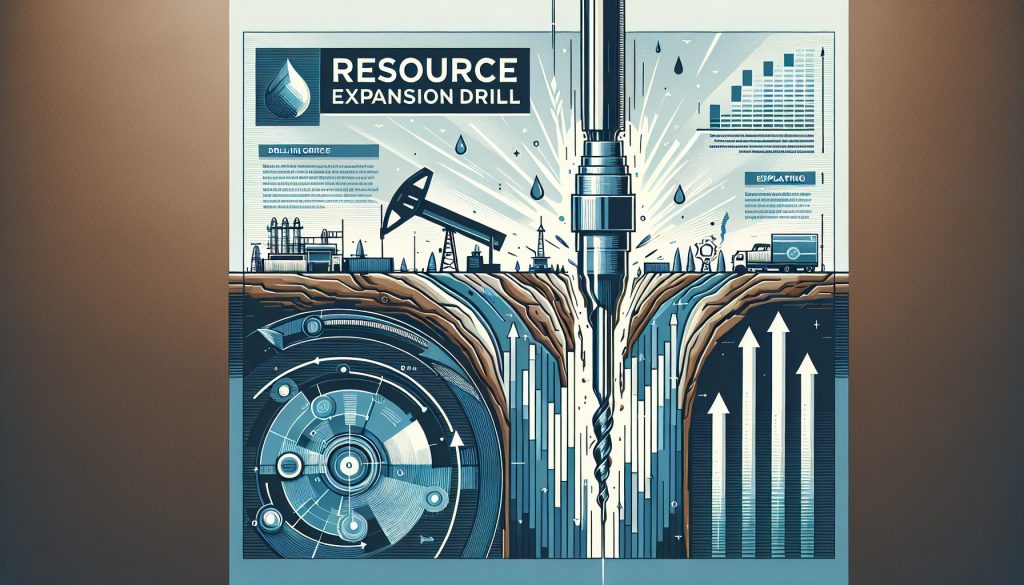
Mining companies worldwide are accelerating their exploration efforts through comprehensive resource expansion drill programs, creating ripple effects across commodity markets and investment portfolios. These intensive drilling campaigns represent far more than routine exploration activities—they serve as critical technical milestones that can fundamentally alter a company’s valuation trajectory and reshape entire market sectors.
When a mining operation initiates a resource expansion drill program, the implications extend well beyond the immediate geological discoveries. These programs typically require substantial capital commitments, often ranging from millions to hundreds of millions of dollars, depending on the scope and location of the target areas. The financial commitment alone signals management’s confidence in the underlying asset’s potential, but the real value lies in the data these programs generate.
The technical execution of a resource expansion drill involves sophisticated planning and cutting-edge technology. Modern drilling operations employ advanced core sampling techniques, real-time geological analysis, and three-dimensional modeling to maximize the probability of successful resource identification. Each drill hole provides crucial data points that help geologists understand the continuity, grade distribution, and overall economic viability of mineral deposits. This systematic approach to resource definition has become increasingly important as easily accessible deposits become scarce and companies must venture into more challenging geological environments.
Market analysts closely monitor resource expansion drill results because they directly impact proven and probable reserve calculations. When drill programs successfully delineate additional resources, companies can extend their operational lifespans, improve their debt-to-equity ratios, and enhance their attractiveness to institutional investors. Conversely, disappointing drill results can trigger significant share price corrections and force management teams to reassess their strategic priorities.
The timing of resource expansion drill announcements often reflects broader market conditions and commodity price cycles. During periods of elevated metal prices, mining companies typically accelerate their drilling activities to capitalize on improved project economics. This cyclical nature creates opportunities for astute investors who can identify companies with promising drill programs before positive results drive share price appreciation.
Environmental and regulatory considerations play an increasingly important role in resource expansion drill planning. Companies must navigate complex permitting processes, conduct comprehensive environmental impact assessments, and engage with local communities before commencing drilling activities. These requirements can significantly extend project timelines and increase costs, but they also provide a competitive moat for companies that successfully complete the regulatory approval process.
The integration of artificial intelligence and machine learning technologies is revolutionizing how companies approach resource expansion drill target selection. Advanced algorithms can analyze vast datasets encompassing geological surveys, historical drilling results, and geophysical measurements to identify the most promising drilling locations. This technological evolution is improving success rates and reducing the per-ounce discovery costs that have plagued the mining industry for decades.
Investors evaluating companies engaged in resource expansion drill programs should focus on several key metrics: the quality of the geological team, the company’s track record of converting resources to reserves, the jurisdiction’s political stability, and the proximity to existing infrastructure. Companies operating in established mining districts with proven geology and existing processing facilities typically offer more favorable risk-adjusted returns than those venturing into frontier territories.
The financing mechanisms for resource expansion drill programs have evolved considerably, with streaming agreements, royalty financing, and joint venture partnerships becoming increasingly common alternatives to traditional equity dilution. These innovative funding structures allow companies to advance their drilling programs while preserving shareholder value and maintaining operational control.
As global demand for critical minerals continues to grow, driven by the energy transition and technological advancement, resource expansion drill programs will play an increasingly vital role in meeting supply requirements. Companies that can successfully execute these complex technical and financial undertakings will be positioned to capture significant value as commodity markets evolve and mature.
