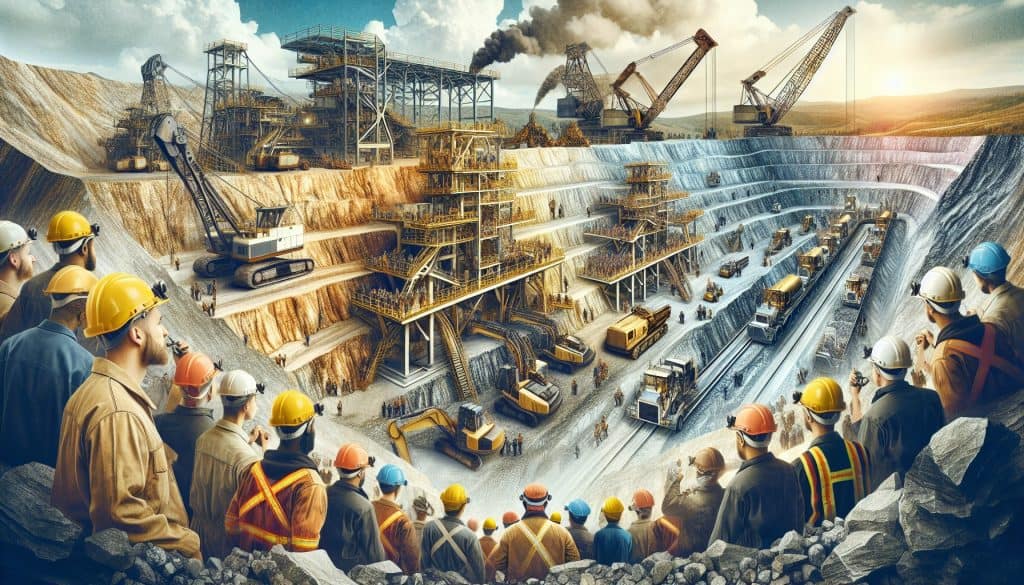
The global lithium market stands at a pivotal crossroads as hard rock mining expansion fundamentally alters how the world’s most critical battery metal reaches manufacturing facilities. While traditional salt brine extraction dominated lithium production for decades, a dramatic shift toward hard rock mining operations is reshaping supply chains, accelerating production timelines, and creating new geopolitical dynamics that could determine which nations control the electric vehicle revolution.
The Technical Advantages Driving Hard Rock Mining Growth
Hard rock mining expansion offers compelling technical advantages over conventional brine extraction methods. Unlike salt flats where lithium-rich water must evaporate over 12-24 months, hard rock operations can process spodumene ore within days of extraction. This dramatically shortened timeline provides mining companies with greater production predictability and reduces vulnerability to weather-related disruptions that frequently plague brine operations in South America’s Lithium Triangle.
Additionally, hard rock deposits typically contain higher lithium concentrations than brine sources, often ranging from 1-3% lithium oxide content compared to brines averaging 0.1-0.2%. This concentration differential means fewer raw materials need processing to achieve equivalent lithium carbonate output, improving operational efficiency and reducing transportation costs.
Geographic Diversification Through Spodumene Mining Projects
The surge in hard rock mining expansion has catalyzed unprecedented geographic diversification in global lithium production. Australia currently leads this transformation, with Western Australia’s Pilbara region hosting numerous spodumene mining operations that collectively produce over 60% of global lithium supply. This Australian dominance has reduced industry dependence on South American brine operations, which historically concentrated production risks in politically volatile regions.
Beyond Australia, significant hard rock lithium projects are advancing across Canada, Finland, and several African nations including Zimbabwe and the Democratic Republic of Congo. This diversification creates multiple supply pathways for battery manufacturers, reducing single-point-of-failure risks that previously threatened electric vehicle production schedules when individual brine operations faced operational challenges.
Processing Innovation and Downstream Integration
Hard rock mining expansion has accelerated innovation in lithium processing technologies, particularly in converting spodumene concentrate into battery-grade lithium compounds. Advanced roasting and leaching techniques now achieve over 85% lithium recovery rates from spodumene, while new hydrometallurgical processes reduce energy consumption by up to 30% compared to traditional methods.
Many hard rock mining companies are pursuing vertical integration strategies, developing on-site processing facilities to convert raw spodumene directly into lithium hydroxide or carbonate. This integration eliminates intermediate shipping steps, reduces processing costs, and provides greater quality control throughout the production chain. Companies implementing these integrated approaches report 15-20% lower production costs per ton of lithium equivalent.
Environmental Considerations and Sustainability Metrics
The environmental profile of hard rock mining expansion presents both challenges and advantages compared to brine extraction. While hard rock operations require significant energy for crushing, grinding, and roasting processes, they typically consume 70-80% less water than brine evaporation operations. This reduced water consumption proves particularly valuable in arid regions where water scarcity affects local communities and ecosystems.
Modern hard rock lithium mines increasingly incorporate renewable energy systems, with several Australian operations achieving over 50% renewable power usage through integrated solar and wind installations. These sustainability improvements help battery manufacturers meet environmental, social, and governance (ESG) requirements while maintaining competitive production costs.
Market Dynamics and Price Implications
Hard rock mining expansion has introduced greater price stability into lithium markets through improved supply predictability. Unlike brine operations where production can fluctuate dramatically based on rainfall and evaporation rates, hard rock mines maintain consistent output levels that help stabilize spot prices and support long-term supply contracts.
This stability has encouraged battery manufacturers to establish direct partnerships with hard rock mining operations, creating dedicated supply chains that bypass traditional commodity trading markets. These partnerships often include technology-sharing agreements and joint venture arrangements that further integrate mining operations with downstream manufacturing processes.
Future Outlook and Strategic Implications
The trajectory of hard rock mining expansion suggests continued growth as global lithium demand increases. Industry analysts project hard rock operations will supply over 75% of global lithium production by the end of the decade, marking a complete reversal from historical brine dominance. This shift carries profound implications for resource-rich nations seeking to capitalize on growing battery metal demand.
Countries with significant hard rock lithium deposits are developing comprehensive mining policies to attract investment while ensuring domestic benefits from resource extraction. These policies often include local processing requirements, technology transfer mandates, and revenue-sharing mechanisms designed to build domestic battery supply chain capabilities.
The transformation of global lithium production through hard rock mining expansion represents more than a simple shift in extraction methods—it signals a fundamental restructuring of supply chains that will influence electric vehicle adoption rates, battery technology development, and international trade relationships for decades to come. As this evolution continues, stakeholders across the lithium value chain must adapt their strategies to capitalize on the opportunities and navigate the challenges this transition presents. Stay informed about these developments by following industry reports and monitoring policy changes in key lithium-producing regions.