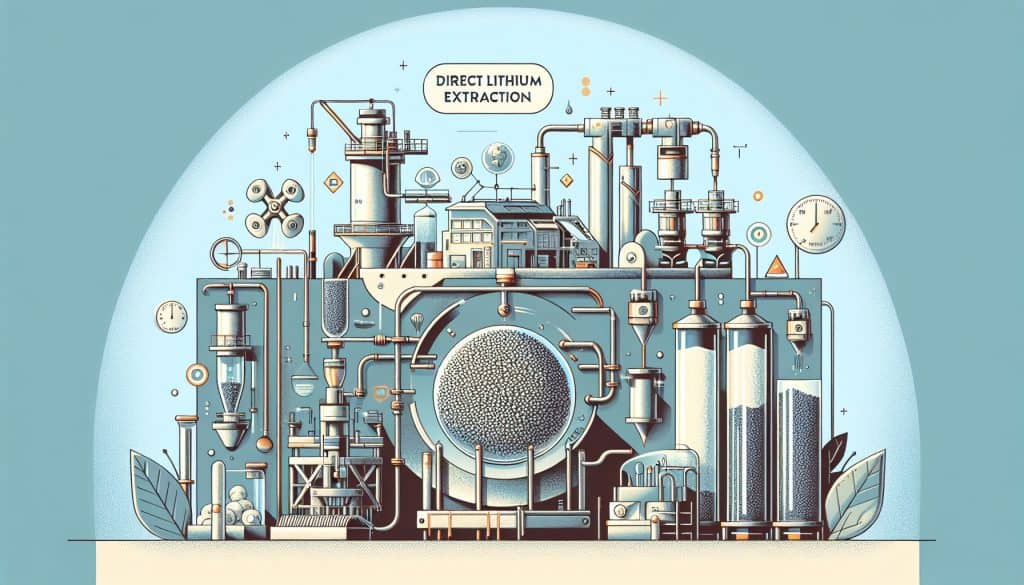
The global lithium industry stands at a pivotal moment as revolutionary extraction technologies challenge traditional mining methods that have dominated the market for decades. Direct lithium extraction (DLE) represents the most significant advancement in lithium production since commercial mining began, promising to transform how the world accesses this critical battery metal while addressing mounting environmental concerns and supply chain pressures.
Traditional lithium extraction methods have long relied on either hard rock mining or massive evaporation ponds that can take 12-24 months to produce lithium carbonate. These conventional approaches face increasing scrutiny due to their substantial water consumption, extensive land use, and slow processing times that struggle to meet the explosive demand from electric vehicle manufacturers and energy storage systems. Direct lithium extraction technology emerges as a game-changing alternative that can process lithium-rich brines in hours rather than months, while dramatically reducing environmental impact.
The mechanics of direct lithium extraction involve sophisticated membrane technologies, ion exchange systems, and selective adsorption methods that can extract lithium directly from brines with remarkable efficiency. These advanced systems typically achieve lithium recovery rates exceeding 90%, compared to traditional evaporation methods that often recover only 30-50% of available lithium. Major lithium producers including Albemarle, SQM, and emerging players like E3 Metals have invested heavily in DLE pilot projects, recognizing the technology’s potential to unlock previously uneconomical lithium resources.
The economic implications of widespread direct lithium extraction adoption extend far beyond individual mining operations. Industry analysts project that DLE technology could reduce lithium production costs by 20-40% while simultaneously increasing global lithium supply capacity by accessing lower-grade brines and geothermal sources previously considered unviable. This cost reduction comes at a critical time as automakers face pressure to reduce battery costs and make electric vehicles more accessible to mainstream consumers.
Environmental benefits represent another compelling driver for direct lithium extraction adoption. Traditional evaporation pond methods require approximately 500,000 gallons of water to produce one ton of lithium, while DLE systems can reduce water consumption by up to 95%. The technology also eliminates the need for massive surface ponds that can disrupt local ecosystems and wildlife migration patterns. As governments worldwide implement stricter environmental regulations on mining operations, DLE offers producers a pathway to maintain social license while expanding production capacity.
Geographically, direct lithium extraction is reshaping the global lithium landscape by enabling production in regions previously excluded from the market. The technology’s ability to process lower-grade brines opens opportunities in North America, where companies are developing DLE projects in Arkansas, Nevada, and Alberta. This geographic diversification reduces dependence on South American lithium triangle resources and creates more resilient supply chains for battery manufacturers seeking to reduce geopolitical risk.
Technical challenges remain as direct lithium extraction scales from pilot projects to commercial operations. Membrane fouling, energy consumption optimization, and handling complex brine chemistries require ongoing innovation and investment. However, recent breakthroughs in selective ion exchange materials and automated membrane cleaning systems have addressed many early technical hurdles, with several commercial-scale DLE facilities now entering production phases.
The convergence of technological maturity, environmental pressures, and unprecedented lithium demand creates ideal conditions for direct lithium extraction to fundamentally reshape global lithium production. As battery manufacturers prioritize sustainable supply chains and governments push for domestic lithium production capabilities, DLE technology positions itself as the cornerstone of next-generation lithium extraction. The companies and regions that successfully deploy this technology at scale will likely command significant advantages in the rapidly evolving energy transition economy, making direct lithium extraction not just an environmental imperative, but a strategic necessity for future market leadership.
