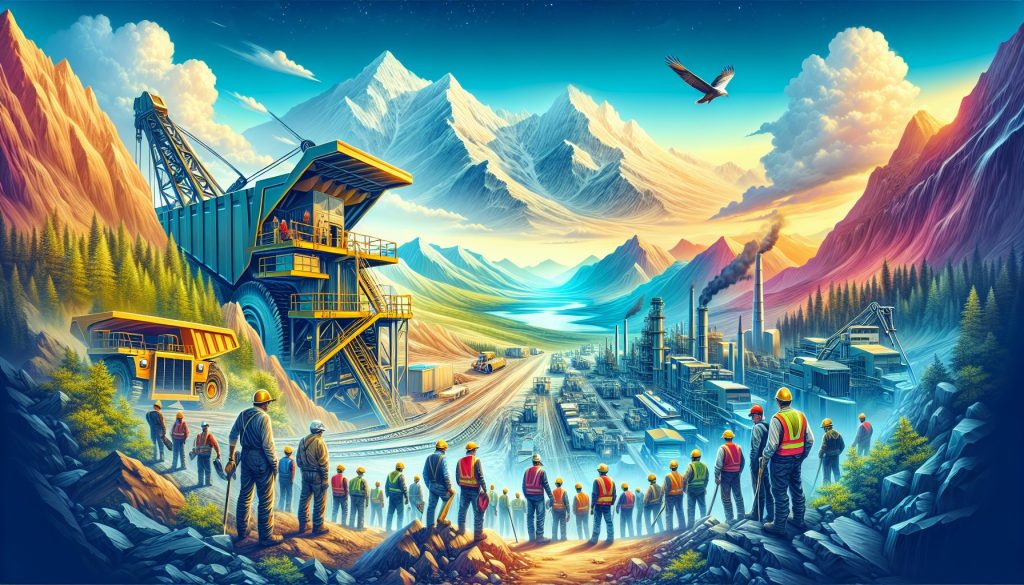
The lithium industry stands at a pivotal crossroads as hard rock mining expansion fundamentally alters the landscape of global battery metal production. While traditional lithium extraction from salt brines dominated the market for decades, a dramatic shift toward spodumene-based hard rock operations is rewriting the rules of supply, geography, and market dynamics.
This transformation carries profound implications beyond simple extraction methods. The hard rock mining expansion represents a strategic pivot that promises faster production timelines, reduced geographical concentration risks, and enhanced supply chain resilience for the electric vehicle revolution. Unlike brine operations that can take years to reach full production capacity, hard rock mining facilities can achieve commercial output within 12-18 months of development completion.
Australia has emerged as the undisputed leader in this transition, with the Pilbara region becoming synonymous with large-scale spodumene production. Major operations like Greenbushes and Mount Marion have demonstrated the commercial viability of hard rock extraction, producing lithium concentrate that feeds processing facilities across Asia and North America. The technical advantages are compelling: hard rock mining operations can achieve lithium concentrations of 6-7% in spodumene ore, compared to typical brine concentrations of just 0.1-0.2%.
The geographic diversification enabled by hard rock mining expansion extends far beyond Australia’s borders. Significant developments are reshaping lithium production across North America, with projects in Quebec, Ontario, and North Carolina advancing toward commercial production. European initiatives in Portugal and Finland are similarly gaining momentum, driven by regional strategies to reduce dependence on distant supply sources.
Environmental and Economic Trade-offs
The environmental profile of hard rock mining expansion presents both challenges and opportunities compared to traditional brine extraction. While hard rock operations typically require more energy-intensive processing and generate larger volumes of waste rock, they avoid the water consumption concerns and ecological disruption associated with brine pond operations in sensitive desert ecosystems. Modern hard rock facilities are incorporating renewable energy sources and implementing circular economy principles to minimize their environmental footprint.
Processing technology improvements have dramatically enhanced the economics of hard rock lithium extraction. Advanced flotation techniques and direct lithium extraction technologies are increasing recovery rates while reducing processing costs. These innovations have lowered the break-even point for many hard rock projects, making them competitive with established brine operations even during periods of price volatility.
The market dynamics reflect this operational shift, with lithium hydroxide and carbonate prices showing increased correlation with hard rock production costs rather than traditional brine operation economics. Supply chain integration has become increasingly sophisticated, with mining companies establishing strategic partnerships with battery manufacturers and automotive companies to secure long-term demand commitments.
Strategic Implications for Global Supply Chains
The hard rock mining expansion is fundamentally altering the geopolitical landscape of lithium supply. Traditional lithium production concentrated in South America’s lithium triangle created potential supply bottlenecks and political risks that concerned battery manufacturers and automotive companies. The geographic diversification enabled by hard rock operations spreads production risk across multiple continents and political jurisdictions.
Processing capacity development has become equally critical as raw material extraction. Countries hosting hard rock mining operations are increasingly developing downstream processing capabilities to capture more value from their lithium resources. This vertical integration trend is creating regional lithium supply ecosystems that reduce transportation costs and supply chain complexity for end users.
The competitive landscape continues evolving as established mining companies expand their lithium portfolios through hard rock acquisitions and development projects. Traditional copper and gold miners are leveraging their operational expertise to enter the lithium sector, bringing capital resources and technical capabilities that accelerate project development timelines.
As the global transition to electric mobility accelerates, hard rock mining expansion represents more than a simple shift in extraction methodology—it embodies a strategic reconfiguration of lithium supply chains that prioritizes speed, reliability, and geographic diversity. The companies and countries successfully navigating this transition are positioning themselves as essential participants in the clean energy economy, while those slow to adapt risk marginalization in an increasingly competitive and strategically important market.
