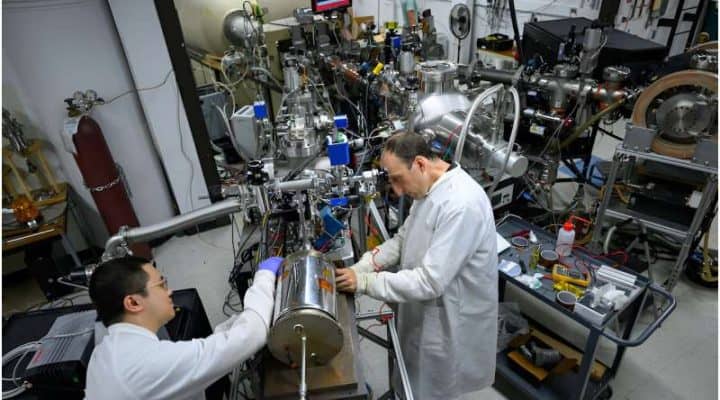
Most discussions of how to avert climate change focus on solar and wind generation as key to the transition to a future carbon-free power system. But Michael Short, the Class of ’42 Associate Professor of Nuclear Science and Engineering at MIT and associate director of the MIT Plasma Science and Fusion Center (PSFC), is impatient […]
Top News
Minnesota utilities hope surge of big-scale batteries helps transition to clean energyJared Newton remembers panicking at times when launching three first-of-their-kind battery projects in Minnesota for Connexus Energy in 2019. Would lithium technology — paired with solar farms — charge fast enough in the morning to meet afternoon electric needs? “Until I saw it in action, we didn’t know if we’d be able to get them charged in time,” said Newton, who leads engineering and system operations for the electric cooperative in Ramsey. Newton and Connexus are local trailblazers in the fledgling world of utility batteries. Now, Minnesota is on the brink of a large-scale rollout of the mega batteries over the next six years, putting the state on pace for a relative boom in battery infrastructure. On Thursday, state utility regulators approved a certificate of need for a $450 million project by Invenergy near Lake Wilson that would be by far the largest storage system in the state. Utilities — plus state planners here and across the country — are counting on utility-scale batteries to help with the shift from coal to wind and solar energy in the next two decades. However, many forms of the promising technology are still mostly untested beyond pilot projects and the batteries, while they have dropped in price, are still expensive. Xcel Energy, Minnesota’s largest electricity provider, has no batteries in the state so far but released plans in February for a sizable fleet to help as it works toward closing its coal plants by 2030. A study commissioned by the state Legislature released this month also said a battery influx is needed for utilities to meet a state target for carbon-free electricity by 2040. “I feel like we’ve been talking about [energy storage] a long time,” said Julie Pierce, vice president of planning and strategy for Duluth-based Minnesota Power. “Now we’re really seeing the fit and form come into fruition here.” What batteries can be used for The biggest challenge of shifting energy sources from fossil fuels to wind and solar power is 24-hour reliability. If there’s no wind or it’s a cloudy day, it can interfere with power generation. Especially during spikes in need, utilities need a backup. Xcel has two large nuclear plants, some hydropower and will use natural gas “peaking” plants for many years. But batteries can be used instead of gas for extra juice when demand is at its highest, like a hot summer day when people are running air-conditioning. “We’re losing over two gigawatts of round-the-clock potential baseload power,” said Justin Tomljanovic, Xcel’s vice president of corporate development. “We’re replacing it with generally intermittent resources.” Two gigawatts can supply enough power for up to 2 million homes. Astrid Atkinson, CEO of California-based Camus Energy, said batteries also will play many smaller and more specific roles in a modern electric grid that has become more complex because of things like increased use of electric vehicles. Her company is working with Connexus and pitches software that acts as an air-traffic controller and helps cooperatives better use batteries. Pilot projects and ‘baby steps’ Connexus has 15 megawatts of batteries at three sites and plans for more. It uses a form of common lithium batteries that has a short battery life but is trusted and already widely available. Not only was the cooperative an early adopter of batteries, it still stands out. Outside of Connexus, there was only one other utility-scale battery facility in Minnesota as of December, a state study released this month found, and it is small. The study, commissioned by the Legislature and conducted by Siemens Industry, suggested Minnesota could need between 1.35 and 2.8 gigawatts of energy storage to hit the 2040 carbon-free target. Siemens pegged the optimal amount at 1.7 gigawatts, a little more than the capacity of Xcel’s largest Minnesota coal plant in Sherburne County. So far, Xcel has state approval for an experimental 10 megawatt, 100-hour long-duration battery with Form Energy that uses iron and the process of rusting to store power. Great River Energy has a smaller pilot project with Form in the works, too. Cole Funseth, Great River’s manager of generation engineering, said the battery is so promising and desired by the industry because it could help over long stretches, like a polar vortex that hampers natural gas production. Minnesota Power is a partner on the state’s other battery facility, a small lithium ion project in Grand Rapids, but the company is eyeing grant funding after unsuccessfully applying for federal help to test another long-lasting technology known as a flow battery. “The utilities are still very much calling these pilot projects,” said Beth Soholt, executive director of Clean Grid Alliance, a trade group that represents wind, solar and battery developers. “Until they have operating experience — they can touch it, kick it, see what it does — they don’t know.” Meanwhile, Soholt said the 15-state regional grid operator is still taking “baby steps” on batteries, writing rules for the open energy market that will be critical for developers and the future of the technology. In this early phase, utilities also say grant money is crucial. Ryan Long, Xcel’s president in Minnesota, said in general the economics for batteries have improved. But Pierce of Minnesota Power said costs are still high, especially for technology that hasn’t been fully commercialized. “It’s probably on the higher end of some of the [carbon-free] alternatives right now, though we do have a lot of hope for the industry,” Pierce said. Xcel, while refusing to divulge the overall cost, got a $70 million grant to use on the Form pilot project in Minnesota and another in Colorado, as well as $20 million from a Bill Gates-founded platform. Power surge ahead Xcel’s new long-range plan calls for 600 megawatts of storage by 2030, which is large but less than half the power output of the large coal-fired plant in Sherburne County. Great River plans to add 200 megawatts in 2030. The state Public Utilities Commission (PUC) approved a plan for Minnesota Power to incorporate up to 500 megawatt hours — a measure that accounts for output and duration — of storage, likely by 2030. That is in the ballpark for how much battery storage Siemens found each utility might need. Smaller cooperatives and municipal utilities also will have to build hundreds of megawatts of batteries in total, Siemens said. Still, the question of exactly what kind of technology the utilities will build is unresolved. Connexus seems likely to keep its focus on lithium, the proverbial meat and potatoes of the battery world. Newton said long-duration batteries are likely critical in a carbon-free grid, but he said the highly anticipated technology such as Form seems “sort of like vaporware” until it’s actually operating. Xcel isn’t solely focused on the Form battery either. Tomljanovic said the utility is planning on also using lots of the readily available lithium ion units. And because long-range technology is still under development, the Siemens projection was based on four-hour lithium ion. Great River initially said its Form battery would be in operation by the end of 2023, though now the company expects late 2024 or early 2025. Funseth said the delay is because GRE is waiting to get batteries produced at Form’s factory under construction in West Virginia rather than get custom infrastructure. “I wish the Form Energy pilot projects could go faster,” Soholt said. “Because I think that we need to understand if they’re going to pan out or not.” Minnesota Power also is looking at a combination of technologies, Pierce said. The utility needs energy storage systems that can last for 10 to 12 hours that would better serve the company’s customer base, which includes heavy industry like taconite mines. Right now, along with state regulators, Xcel is taking bids for a large amount of what is called “dispatchable” energy — power sources like gas plants or batteries that can be called on quickly for fast power that isn’t dependent on weather. The Invenergy project near Lake Wilson in front of the PUC Thursday was for a 95 MW lithium ion battery project — the largest in the state if built — and solar farm. Then there are more novel ideas. California-based Rondo Energy bid what it calls a thermal battery, which would operate by storing heat in refractory bricks that could be released as steam heat or electricity. Connexus, Newton said, is confident now in both the economics and operation of its batteries. “It had to save money for the members,” he said. “But then we’re also really excited because we now have had a team of engineers and operators that have five years of battery experience under their belt.”
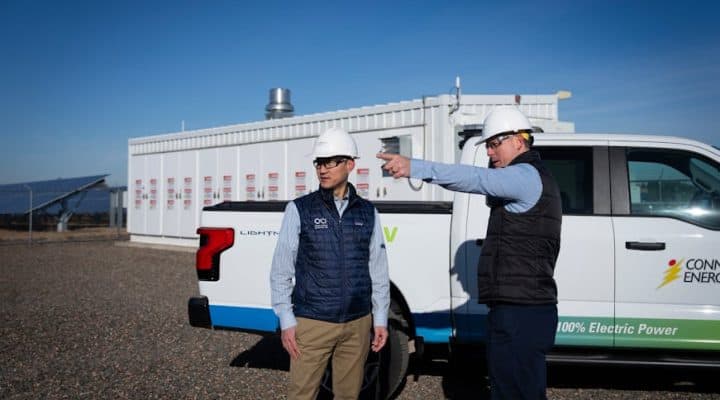
Jared Newton remembers panicking at times when launching three first-of-their-kind battery projects in Minnesota for Connexus Energy in 2019. Would lithium technology — paired with solar farms — charge fast enough in the morning to meet afternoon electric needs? “Until I saw it in action, we didn’t know if we’d be able to get them […]
HELENA project produces solid-state battery cell with halide electrolyte
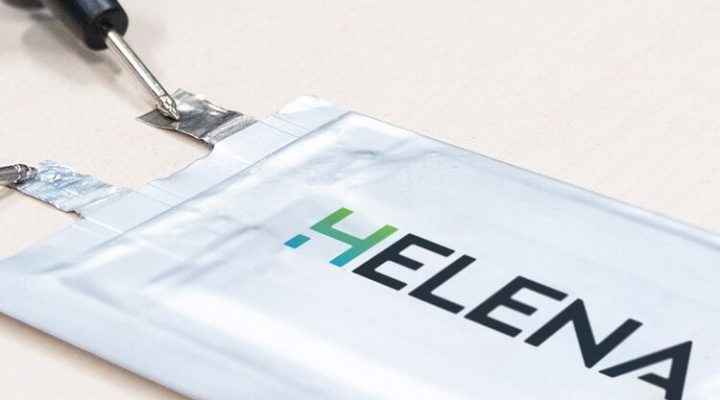
HELENA stands for “Halide Solid State Batteries for Electric Vehicles and Aircrafts” and aims to accelerate the development of powerful and stable solid-state batteries for electric road vehicles and aircraft. The 15 project participants began their work under the coordination of the CIC energiGUNE research center a good one and a half years ago. Now […]
Fortescue eyes developing its copper assets, not looking at Cobre Panama
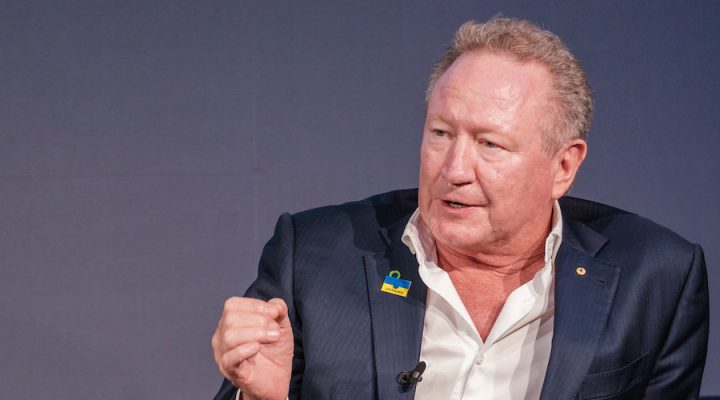
Australia’s Fortescue, the world’s fourth-largest iron ore miner, is looking at developing its copper resources but has not made a decision yet, its founder and executive chairman told Reuters on Saturday. “The company has choices in front of it … we have a lot of copper options on the table. And when we feel the […]
Arcimoto Introduces A Custom-Built Electric Vehicle For Around-Town Deliveries
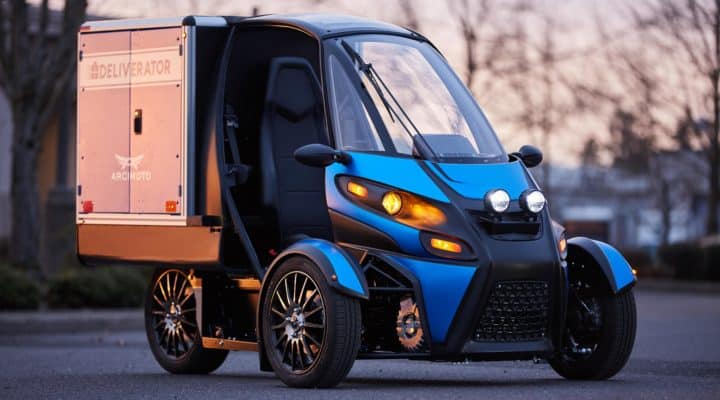
Electric vehicle company Arcimoto has reshaped its two-seat Fun Utility Vehicle into a single-seat delivery vehicle, dubbed the Deliverator. The prototype build of the new vehicle reveals just how intuitive the vehicle platform is, and makes great use of the solid electric vehicle drivetrain the company has spent years perfecting. It is not difficult to […]
Deal could bring more electric off-roaders: No more buzzing through the woods
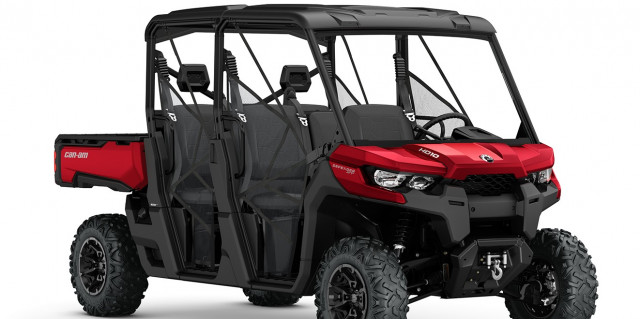
One way to get more buyers interested in electric cars is to introduce electric power to other machines whose function is less critical, and where consumers can get used to the idea of driving electrically. That could be the outcome of a deal in which Bombardier Recreational Products has purchased selected assets from Alta Motors […]
