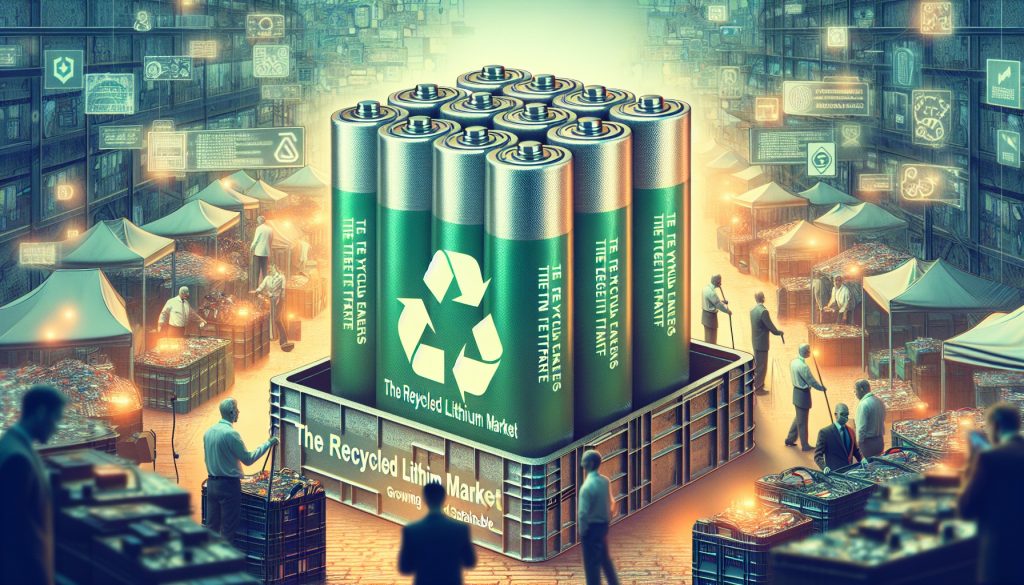
Electric vehicles are racing toward global dominance, but a hidden challenge threatens to slow their progress: lithium scarcity. While the world scrambles to extract more lithium from salt flats and hard rock mines, an innovative solution is quietly revolutionizing the industry. The recycled lithium market has emerged as a critical force, transforming how automakers source materials and reshaping the entire electric vehicle supply chain.
Traditional lithium extraction has long been plagued by environmental concerns, geopolitical risks, and supply bottlenecks. Mining operations require vast amounts of water, disrupt local ecosystems, and often face regulatory delays that can stretch for years. These challenges have created an opportunity for recycling companies to step into the spotlight, offering a sustainable alternative that’s capturing the attention of major automakers and investors alike.
The recycled lithium market is experiencing unprecedented growth, driven by both economic incentives and environmental imperatives. Battery recycling facilities can now recover up to 95% of lithium content from end-of-life batteries, creating a closed-loop system that dramatically reduces waste. This process not only conserves valuable resources but also eliminates the need for energy-intensive mining operations that can take decades to develop.
Tesla, General Motors, and Ford have all invested heavily in recycling partnerships, recognizing that securing a stable supply of recycled lithium is essential for meeting their ambitious production targets. These collaborations have accelerated technological breakthroughs in battery recovery processes, making recycled lithium cost-competitive with newly mined materials. Industry analysts estimate that recycled lithium can be produced at 20-30% lower costs than traditional extraction methods when accounting for the full lifecycle impact.
The recycled lithium market faces unique challenges that distinguish it from conventional mining operations. Battery collection networks must be established to gather end-of-life electric vehicle batteries, consumer electronics, and energy storage systems. Recycling facilities require sophisticated separation technologies to extract lithium carbonate and lithium hydroxide with the purity levels demanded by battery manufacturers. These technical hurdles have created barriers to entry but also opportunities for companies that can master the complex chemistry involved.
Consumer electronics have become an unexpected catalyst for the recycled lithium market’s expansion. Smartphones, laptops, and tablets contain millions of pounds of lithium that would otherwise end up in landfills. Forward-thinking companies have developed efficient collection and processing systems that turn electronic waste into valuable battery materials, creating additional revenue streams while addressing environmental concerns.
Government regulations are accelerating adoption of recycled lithium across multiple markets. The European Union’s proposed battery regulations mandate minimum recycled content in new batteries, while China has implemented comprehensive battery recycling requirements that favor domestic recycling operations. These policy frameworks are creating predictable demand for recycled materials and encouraging investment in advanced recycling infrastructure.
The recycled lithium market’s impact extends beyond cost savings and environmental benefits. Supply chain resilience has become a strategic priority for automakers following recent disruptions in global commodity markets. Recycled lithium can be processed domestically, reducing dependence on imports from politically unstable regions and minimizing transportation costs. This localization trend is particularly attractive to manufacturers seeking to qualify for government incentives that favor domestically sourced materials.
Technology advancements continue to improve the economics and efficiency of lithium recycling. Direct recycling methods that preserve the crystalline structure of cathode materials are showing promise for reducing processing costs and energy consumption. Hydrometallurgical processes have become more refined, enabling higher recovery rates and better quality control. These innovations are positioning the recycled lithium market as a long-term solution rather than a temporary bridge to increased mining capacity.
As electric vehicle adoption accelerates globally, the recycled lithium market stands poised to play an increasingly central role in sustaining the industry’s growth. The convergence of environmental responsibility, economic efficiency, and supply chain security has created powerful momentum behind recycling initiatives. Companies that successfully navigate the technical and logistical challenges of lithium recycling are positioning themselves at the heart of the electric vehicle revolution, proving that sustainability and profitability can drive innovation in equal measure.