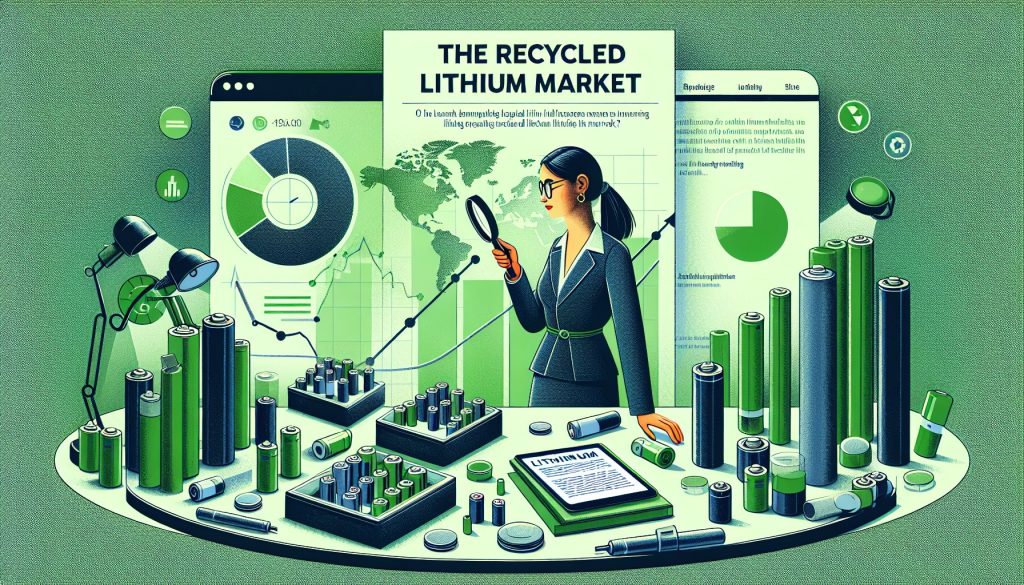
As electric vehicle sales surge and energy storage systems multiply across the globe, a critical challenge emerges: securing enough lithium to power this clean energy revolution. Traditional mining operations struggle to keep pace with exponential demand, creating unprecedented opportunities in the recycled lithium market. This emerging sector is rapidly evolving from an environmental afterthought into a cornerstone of sustainable battery manufacturing.
Market Dynamics Driving Recycled Lithium Growth
The recycled lithium market has experienced remarkable expansion, with industry analysts projecting compound annual growth rates exceeding 25% through the decade. This acceleration stems from multiple converging factors: lithium prices that have quadrupled since 2020, mining projects facing increasingly stringent environmental regulations, and automakers desperately seeking supply chain security for their electric vehicle ambitions.
China dominates current recycling capacity, processing nearly 60% of the world’s spent lithium-ion batteries. However, North American and European facilities are rapidly scaling operations, driven by government incentives and strategic investments from battery manufacturers. Companies like Redwood Materials and Li-Cycle have secured billions in funding to build industrial-scale recycling facilities that can recover up to 95% of lithium content from used batteries.
Technology Breakthroughs Reshape Battery Recycling Economics
Advanced recycling technologies are fundamentally changing the economics of the recycled lithium market. Direct recycling methods now preserve the molecular structure of cathode materials, allowing recycled lithium to match virgin material performance while reducing processing costs by up to 40%. Hydrometallurgical processes have become more efficient, with new solvent extraction techniques increasing lithium recovery rates while minimizing chemical waste.
Artificial intelligence and machine learning algorithms optimize sorting processes, automatically identifying battery chemistries and directing materials to appropriate recycling streams. These technological advances have reduced processing times from weeks to days, making recycled lithium increasingly cost-competitive with traditionally mined supplies.
Supply Chain Integration Accelerates Market Adoption
Major automakers are integrating recycled lithium directly into their supply chains, moving beyond pilot programs to commercial-scale partnerships. Tesla’s agreement to source recycled materials for 50% of its battery production by 2030 signals a broader industry shift toward circular manufacturing models. Ford, GM, and Stellantis have announced similar commitments, creating stable demand that enables recycling facility investments.
The recycled lithium market benefits from increasingly sophisticated collection networks. Automotive dealerships now serve as battery collection points, while consumer electronics retailers expand take-back programs. This infrastructure development ensures steady material flows to recycling facilities, reducing the boom-bust cycles that previously plagued the industry.
Regulatory Framework Shapes Market Evolution
Government policies worldwide are creating favorable conditions for recycled lithium market growth. The European Union’s Battery Regulation mandates minimum recycled content in new batteries, starting at 12% for lithium by 2031 and increasing to 20% by 2036. Similar regulations in development across North America and Asia establish recycled content requirements that guarantee market demand.
Tax incentives and grants further accelerate adoption. The U.S. Inflation Reduction Act provides production credits for recycled battery materials, while state-level programs offer additional support. These policy frameworks reduce investment risks and encourage long-term planning in recycling infrastructure.
The transformation of the recycled lithium market from niche environmental initiative to essential industrial process reflects broader changes in how we approach resource management. As battery demand continues its relentless climb, recycled lithium offers a path toward supply security that doesn’t depend on new mining operations or geopolitically sensitive regions. Companies that establish strong positions in this evolving market today are positioning themselves at the center of tomorrow’s sustainable energy infrastructure, where recycled materials won’t be alternative supplies—they’ll be the primary foundation of clean energy technology.