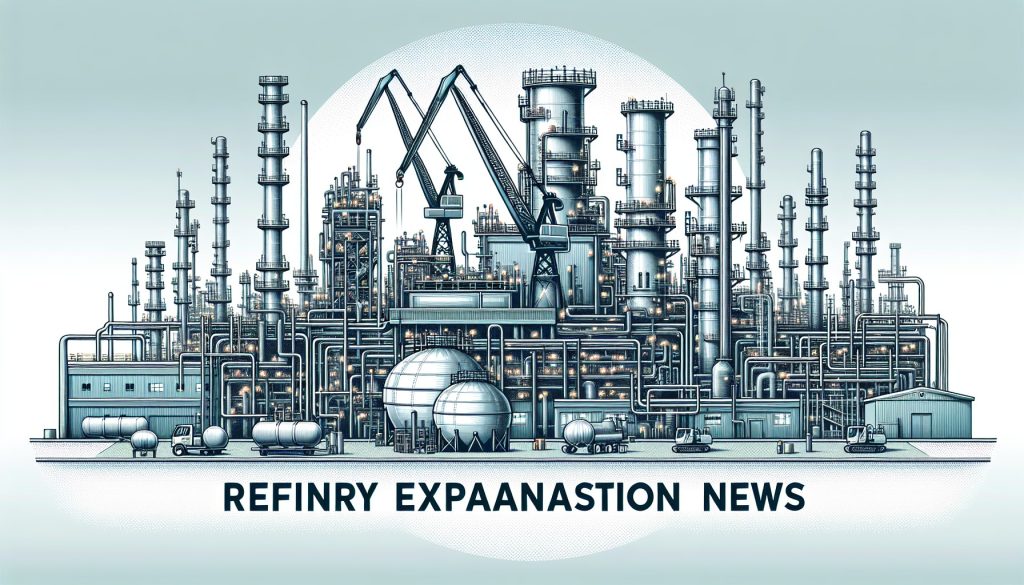
The lithium industry stands at a pivotal moment as refinery expansion news continues to reshape extraction methodologies worldwide. Major processing facilities are implementing groundbreaking technologies that promise to revolutionize how this critical battery metal reaches global markets, with implications extending far beyond traditional mining operations.
Recent refinery expansion news from North America reveals that newly constructed facilities are incorporating direct lithium extraction (DLE) systems capable of processing brine at unprecedented speeds. These advanced systems utilize selective ion-exchange membranes and electrochemical separation techniques that can extract lithium from complex brines in hours rather than the traditional evaporation methods requiring months or years. The technological leap represents a fundamental shift in industry capabilities, enabling refineries to process previously uneconomical lithium sources.
Australian refinery expansion projects demonstrate another technological frontier through the integration of artificial intelligence and machine learning algorithms. These systems continuously optimize extraction parameters, adjusting chemical compositions, temperature controls, and processing speeds in real-time based on incoming ore characteristics. The result is a dramatic improvement in recovery rates, with some facilities reporting lithium extraction efficiencies exceeding 95% compared to traditional methods averaging 60-70%.
The latest refinery expansion news from South American operations highlights innovations in environmental sustainability alongside extraction efficiency. New facilities are implementing closed-loop water systems that reduce freshwater consumption by up to 80% while simultaneously capturing and processing waste streams that were previously discarded. Advanced filtration and purification technologies allow these refineries to produce battery-grade lithium carbonate while maintaining significantly lower environmental footprints than conventional operations.
European refinery expansion initiatives are pioneering hybrid processing technologies that combine multiple extraction methods within single facilities. These operations can seamlessly switch between processing hard rock spodumene ores and lithium-rich brines, providing unprecedented flexibility in raw material sourcing. The technological integration allows refineries to maintain consistent production volumes regardless of supply chain variations or commodity price fluctuations affecting specific lithium sources.
Emerging technologies showcased in recent refinery expansion news include nanofiltration membranes engineered specifically for lithium separation. These molecular-level filters can distinguish between lithium ions and other dissolved minerals with remarkable precision, enabling extraction from previously unusable sources including geothermal brines, oilfield waters, and even seawater concentrates. The breakthrough technology opens vast new lithium reserves that were technically or economically inaccessible using conventional methods.
The integration of renewable energy systems within expanded refinery operations represents another significant advancement highlighted in industry news. Solar thermal systems now power evaporation processes, while wind and photovoltaic installations provide electricity for electrochemical separation equipment. These energy-independent facilities can operate in remote locations while maintaining cost competitiveness with traditional grid-powered operations.
Automation technologies featured in refinery expansion news demonstrate how robotics and remote monitoring systems are transforming lithium processing operations. Autonomous material handling systems transport and process lithium-bearing materials with minimal human intervention, while advanced sensor networks provide continuous monitoring of product quality and environmental conditions. These technological implementations improve both operational safety and production consistency while reducing labor costs.
Advanced purification technologies emerging from refinery expansion projects are enabling the production of ultra-high purity lithium compounds required for next-generation battery technologies. Specialized crystallization processes and ion chromatography systems can produce lithium materials with impurity levels measured in parts per billion, meeting the stringent requirements for solid-state batteries and other emerging energy storage applications.
The cumulative impact of these technological advances showcased in refinery expansion news extends throughout the entire lithium supply chain. Enhanced extraction efficiencies and processing capabilities are creating more stable pricing environments while reducing the environmental impact of lithium production. As these technologies continue to mature and spread across global operations, they promise to establish lithium as an increasingly sustainable and economically viable foundation for the world’s transition to renewable energy storage systems.