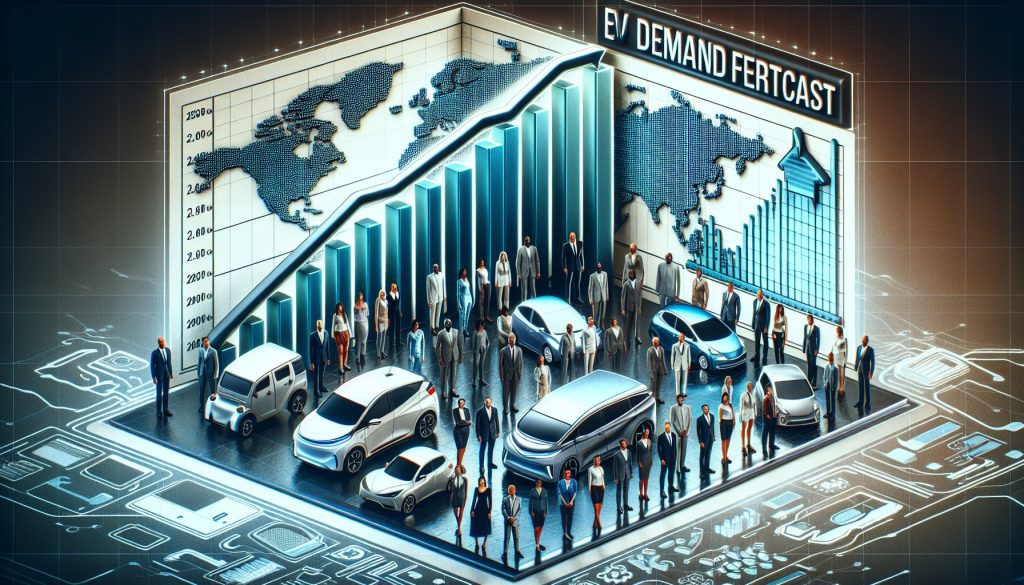
The electric vehicle revolution isn’t happening by accident—it’s being carefully orchestrated by sophisticated forecasting models that predict when, where, and how consumers will embrace electric transportation. While most people see the growing number of EVs on roads as organic growth, industry insiders know that every charging station, battery factory, and dealership expansion has been strategically positioned based on comprehensive EV demand forecast data.
Global automakers are investing hundreds of billions of dollars in electric vehicle production based on these predictive models. Ford’s $50 billion commitment to electrification, General Motors’ pledge to go all-electric by 2035, and Volkswagen’s massive battery investments all stem from detailed forecasting analyses that map out consumer adoption patterns, regulatory changes, and technological breakthroughs years in advance. These companies aren’t gambling on gut instincts—they’re following the mathematical precision of demand forecasting.
The sophistication of modern EV demand forecast methodologies extends far beyond simple trend analysis. Today’s models incorporate machine learning algorithms that process thousands of variables simultaneously: regional income distributions, gas price volatility, charging infrastructure density, government incentive programs, battery cost trajectories, and even weather patterns that affect driving behavior. This multidimensional approach allows forecasters to predict not just how many EVs will be sold, but specifically which models will succeed in particular geographic markets.
Infrastructure development represents perhaps the most critical application of these forecasting models. Electric utilities are using EV demand forecast data to plan grid upgrades and determine where additional power generation capacity will be needed. The placement of fast-charging networks along highways isn’t random—it follows precise calculations about traffic patterns, travel routes, and projected EV adoption rates in different corridors. Companies like ChargePoint and Electrify America have built their entire business strategies around these predictive insights.
Battery manufacturers have emerged as some of the most sophisticated users of demand forecasting technology. The multi-year lead times required to build battery production facilities mean that companies must accurately predict demand half a decade into the future. Tesla’s Gigafactory network, CATL’s global expansion, and the wave of new battery plants across North America all reflect careful analysis of long-term EV adoption curves. A single miscalculation in EV demand forecast data could result in billions of dollars in stranded assets or critical supply shortages.
Government agencies worldwide are incorporating these forecasting models into policy decisions that will shape the transportation landscape for decades. The Biden administration’s charging infrastructure investments, California’s ICE vehicle phase-out timeline, and the European Union’s emission reduction targets all rely heavily on EV demand forecast projections. These policies, in turn, influence consumer behavior and create feedback loops that affect future demand patterns.
Regional variations in EV adoption present both opportunities and challenges for forecasters. While urban areas with higher incomes and environmental consciousness typically lead adoption curves, rural markets are showing surprising pockets of growth driven by different factors like fuel cost savings and reduced maintenance requirements. Successful EV demand forecast models must account for these geographic nuances to provide actionable insights for businesses and policymakers.
The accuracy of EV demand forecasts has improved dramatically as the market has matured and more real-world data becomes available. Early predictions often underestimated the speed of consumer adoption once critical thresholds were reached, particularly regarding range anxiety and charging convenience. Modern forecasting models have learned to account for these adoption accelerators and can better predict the inflection points where EV sales shift from linear to exponential growth.
Supply chain disruptions and geopolitical tensions have added new complexity layers to EV demand forecasting. The semiconductor shortage, lithium price volatility, and shifting trade relationships between major economies all influence both EV production capacity and consumer demand. Today’s forecasting models must incorporate these external factors to maintain their predictive accuracy and provide reliable guidance for strategic decisions.
The convergence of artificial intelligence, vast datasets, and proven forecasting methodologies is creating an unprecedented ability to predict and shape the electric vehicle future. As EV demand forecast accuracy continues improving, we’re witnessing a transformation where market predictions become self-fulfilling prophecies—driving the very infrastructure, investment, and innovation decisions that make electric transportation inevitable. The revolution isn’t just powered by batteries; it’s powered by data-driven insights that illuminate the path ahead.