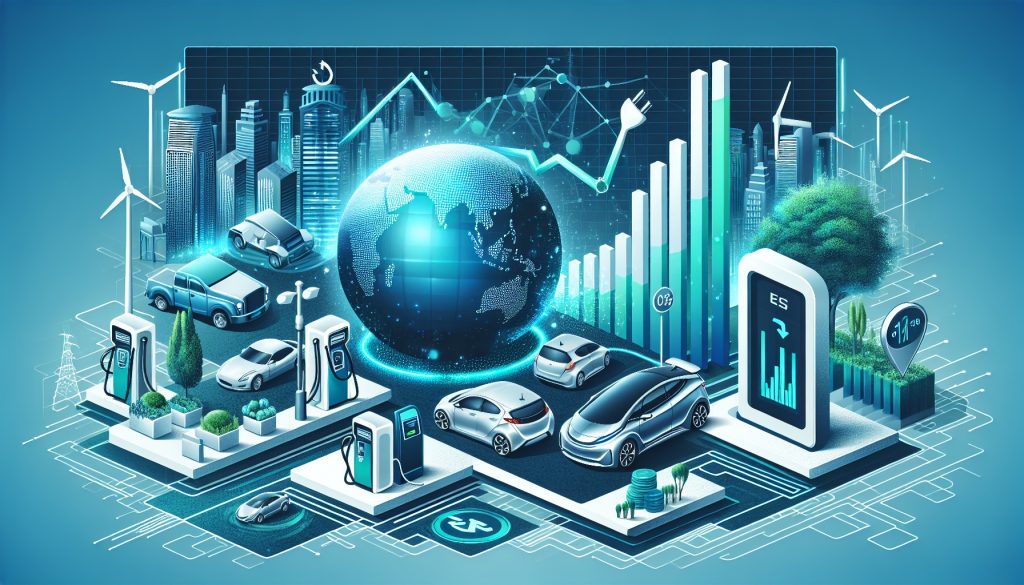
The electric vehicle revolution continues to accelerate at unprecedented rates, fundamentally reshaping investment landscapes across green energy and critical mineral sectors. Recent market analyses paint a compelling picture of sustained growth, with the latest EV demand forecast suggesting annual sales could reach 45 million units globally by 2030, representing a dramatic shift from traditional automotive markets.
Investment firms are recalibrating their portfolios as consumer preferences evolve beyond early adopter enthusiasm toward mainstream acceptance. Tesla’s continued dominance faces increasing competition from established automakers like Ford, GM, and Volkswagen, while Chinese manufacturers such as BYD and NIO expand aggressively into Western markets. This competitive intensity drives innovation while simultaneously creating supply chain pressures that ripple throughout the green technology ecosystem.
Battery technology improvements have become central to meeting ambitious EV demand forecast projections. Lithium-ion battery costs have declined approximately 85% over the past decade, making electric vehicles increasingly cost-competitive with internal combustion engines. However, this progress creates new challenges as manufacturers scramble to secure adequate supplies of lithium, cobalt, nickel, and other critical minerals essential for battery production.
Lithium Supply Chain Dynamics Transform Investment Opportunities
The lithium market represents perhaps the most dramatic transformation within the broader EV ecosystem. Current production capacity struggles to match the exponential growth outlined in most EV demand forecast models, creating substantial investment opportunities for mining companies, processing facilities, and recycling technologies. Argentina, Chile, and Australia dominate global lithium reserves, but emerging players in Africa and North America are attracting significant capital as investors seek supply chain diversification.
Lithium prices have experienced extreme volatility, surging over 400% between 2020 and 2022 before moderating as new production capacity came online. Smart investors recognize that sustainable lithium investments require careful analysis of geological assets, processing capabilities, and proximity to battery manufacturing hubs. Companies that can demonstrate integrated supply chains from mine to battery pack are commanding premium valuations in public markets.
Beyond traditional mining operations, innovative lithium extraction technologies are generating investor excitement. Direct lithium extraction from brine deposits offers faster production timelines and reduced environmental impact compared to conventional evaporation methods. Similarly, lithium recycling from used batteries presents compelling opportunities as first-generation EV batteries approach end-of-life cycles.
Green Energy Infrastructure Investments Align with EV Growth
The ambitious EV demand forecast trajectories depend heavily on parallel investments in renewable energy generation and charging infrastructure. Solar and wind power capacity must expand dramatically to support millions of additional electric vehicles while maintaining grid stability and achieving carbon reduction goals. This creates synergistic investment opportunities across the entire green energy value chain.
Charging network deployment represents another critical investment frontier. Range anxiety continues to influence consumer purchasing decisions, making robust charging infrastructure essential for achieving optimistic EV demand forecast scenarios. Companies developing fast-charging technology, battery swapping systems, and wireless charging solutions are attracting substantial venture capital and strategic investments from automotive manufacturers.
Grid modernization investments become increasingly vital as EV adoption accelerates. Smart grid technologies, energy storage systems, and vehicle-to-grid integration capabilities will determine how effectively electrical infrastructure can accommodate fluctuating demand patterns created by widespread EV charging. Utilities and technology companies that successfully navigate these challenges stand to benefit enormously from the ongoing transportation electrification trend.
The convergence of electric vehicle growth, renewable energy expansion, and critical mineral scarcity creates a complex but rewarding investment landscape. Successful strategies require understanding interconnected relationships between automotive demand, battery technology evolution, and raw material availability. As the latest EV demand forecast data continues demonstrating robust long-term growth prospects, investors who position themselves across this integrated ecosystem are likely to capture the most significant returns while contributing to the global transition toward sustainable transportation solutions.