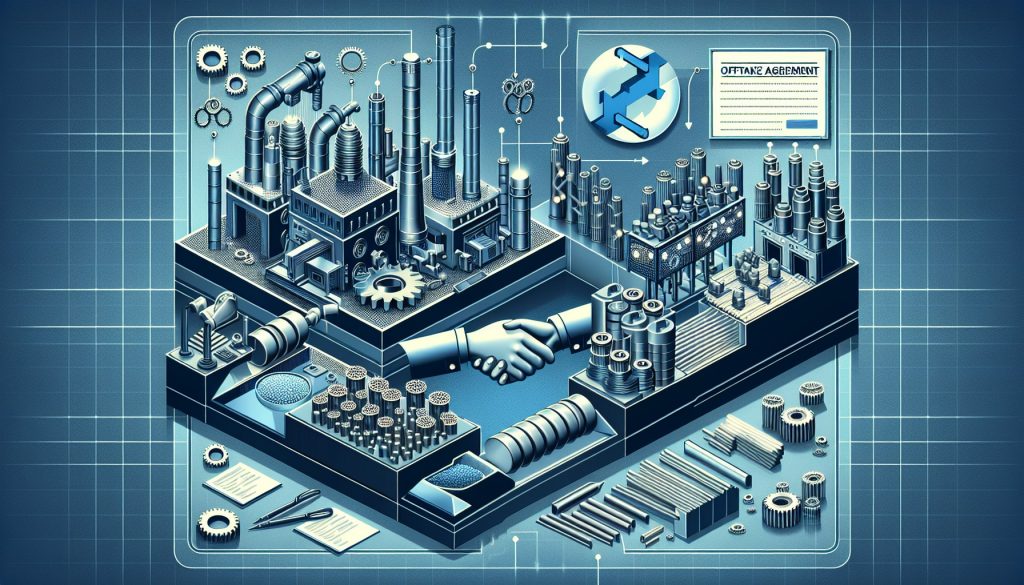
The global battery metals landscape is experiencing a fundamental shift as cathode manufacturers secure long-term supply agreements that reshape entire commodity markets. These strategic partnerships, known as cathode manufacturer offtake deals, have emerged as the backbone of the electric vehicle revolution, creating ripple effects that extend far beyond traditional mining operations.
Battery cathode materials—primarily lithium, nickel, cobalt, and manganese—represent the most critical components in electric vehicle production. As automakers race to meet ambitious electrification targets, cathode manufacturers find themselves at the center of an increasingly complex supply web. The traditional spot market approach has proven inadequate for securing the massive volumes required, driving a surge in sophisticated offtake arrangements that guarantee supply for years or even decades ahead.
Recent market intelligence reveals that cathode manufacturer offtake agreements now account for over 70% of new lithium project financing, marking a dramatic evolution from the commodity trading patterns of just five years ago. These deals typically involve upfront payments, pricing formulas tied to battery metal indices, and volume commitments that provide miners with the financial security needed to develop new projects. In return, cathode manufacturers gain supply certainty in a market notorious for its volatility and supply constraints.
The strategic value of these arrangements extends beyond simple procurement. Leading cathode manufacturers are increasingly selective about their offtake partners, prioritizing suppliers who meet strict environmental, social, and governance criteria. This shift has created a two-tier market where premium ESG-compliant projects command higher prices and attract more favorable financing terms. The implications for mining companies are profound—those unable to meet evolving sustainability standards risk exclusion from the most lucrative offtake opportunities.
Technology Integration Driving New Partnership Models
Modern cathode manufacturer offtake agreements increasingly incorporate technology transfer and joint development components. Rather than simple buyer-seller relationships, these partnerships often involve shared research and development initiatives aimed at optimizing battery chemistry for specific applications. Cathode manufacturers work directly with mining partners to influence extraction processes, ensuring raw materials meet increasingly sophisticated purity and consistency requirements.
The geographic dimension of these offtake relationships has become equally critical. Geopolitical tensions and supply chain resilience concerns have prompted cathode manufacturers to diversify their supplier base across multiple continents. This trend has breathed new life into previously marginal mining projects in politically stable jurisdictions, even when production costs exceed those of traditional suppliers. The premium paid for supply security has fundamentally altered the economics of battery metal mining.
Processing capacity constraints have added another layer of complexity to cathode manufacturer offtake strategies. Many agreements now extend beyond raw material supply to include midstream processing capabilities, as manufacturers seek to secure not just lithium carbonate or nickel sulfate, but battery-grade materials ready for direct integration into cathode production lines. This vertical integration trend has blurred traditional industry boundaries and created new opportunities for companies capable of bridging mining and chemical processing expertise.
Market Intelligence Shaping Investment Flows
Sophisticated market intelligence platforms now track cathode manufacturer offtake commitments in real-time, providing unprecedented visibility into future supply and demand dynamics. These systems aggregate data from hundreds of agreements, revealing patterns that inform both strategic planning and investment decisions. The transparency has accelerated deal-making while helping establish more standardized contract terms across the industry.
Private equity and institutional investors have taken notice, with dedicated battery metals funds raising record amounts specifically to finance projects backed by cathode manufacturer offtake agreements. The long-term, contracted nature of these revenue streams appeals to investors seeking stable returns in the volatile commodities sector. This capital influx has accelerated project development timelines and supported more ambitious expansion plans than would be possible through traditional project financing.
The pricing mechanisms embedded in cathode manufacturer offtake agreements have evolved to balance risk-sharing between buyers and sellers. Modern contracts often feature hybrid pricing structures that combine fixed floor prices with upside participation tied to market indices. This approach provides miners with revenue predictability while ensuring cathode manufacturers benefit from potential cost reductions during market downturns.
As the battery metals market matures, cathode manufacturer offtake agreements represent more than procurement strategies—they embody the collaborative approach necessary to build resilient supply chains for the global energy transition. The companies that master these complex partnerships will ultimately determine which regions, technologies, and business models dominate the next phase of the electric vehicle revolution. The stakes have never been higher, and the intelligence gathered from these evolving relationships continues to reshape how we understand the intersection of mining, manufacturing, and mobility in the modern economy.