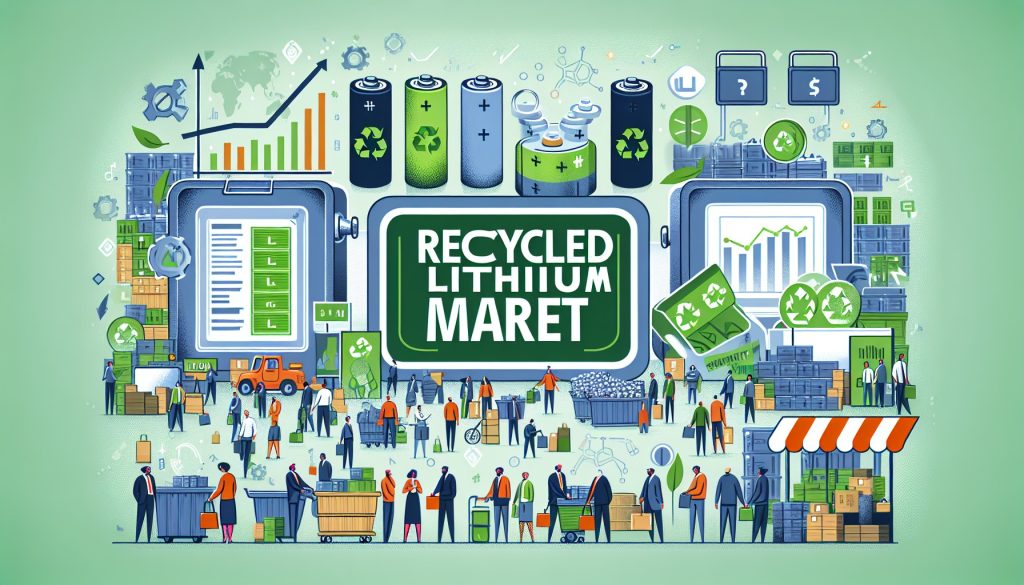
The global transition to sustainable energy has created an unprecedented demand for lithium, the critical component powering everything from electric vehicles to grid-scale energy storage systems. As this demand continues to accelerate, a powerful new investment thesis is emerging around the recycled lithium market, which industry analysts project will reach $18.6 billion by 2030, representing a compound annual growth rate of 24.8%.
Traditional lithium mining faces significant challenges, including lengthy permitting processes, environmental concerns, and geopolitical supply chain risks. These constraints have created a compelling opportunity for recycled lithium producers, who can extract valuable materials from end-of-life batteries and manufacturing waste with dramatically shorter lead times and reduced environmental impact. The recycled lithium market currently processes approximately 95,000 tons annually, but this figure is expected to surge as the first wave of electric vehicle batteries reaches end-of-life status.
Leading automotive manufacturers are driving much of this growth through strategic partnerships with recycling companies. Tesla’s recent expansion of its Nevada Gigafactory includes a dedicated battery recycling facility capable of processing 50,000 vehicle battery packs annually. Similarly, General Motors has committed to sourcing 25% of its lithium requirements from recycled sources by 2030, creating a predictable revenue stream for recycling companies and establishing recycled lithium as a mainstream supply source rather than a niche alternative.
The economics of recycled lithium have become increasingly attractive as technology improvements reduce processing costs while commodity prices remain elevated. Advanced hydrometallurgical processes can now recover 95% of lithium content from spent batteries, compared to just 50% recovery rates using older pyrometallurgical methods. This efficiency gain, combined with the premium pricing that recycled materials command due to their lower carbon footprint, has created profit margins that often exceed those of traditional mining operations.
Geographic diversification represents another compelling aspect of the recycled lithium market. While primary lithium production remains concentrated in a handful of countries, recycling facilities can be established closer to end markets, reducing transportation costs and supply chain vulnerabilities. North America and Europe are emerging as recycling hubs, with the United States allocating $3.1 billion in federal funding to support domestic battery recycling infrastructure through the Infrastructure Investment and Jobs Act.
Regulatory tailwinds are strengthening the investment case for recycled lithium. The European Union’s Battery Directive mandates minimum recycled content requirements for new batteries, starting at 6% for lithium by 2030 and increasing to 12% by 2035. Similar regulations are under consideration in other major markets, creating a policy-driven demand floor that provides revenue certainty for recycling companies. These mandates effectively guarantee market share for recycled materials regardless of commodity price fluctuations.
Investment opportunities in the recycled lithium market span multiple approaches, from pure-play recycling companies to integrated battery manufacturers developing internal recycling capabilities. Public companies like Li-Cycle Holdings and American Battery Technology Company have attracted significant institutional investment, while private equity firms are funding the expansion of regional recycling networks. The sector has raised over $2.4 billion in funding since 2023, indicating strong investor confidence in the long-term growth trajectory.
Market dynamics continue to favor recycled lithium as battery chemistry evolution increases the value of recovered materials. Next-generation solid-state batteries require even higher purity lithium compounds, making the controlled processing environment of recycling facilities advantageous compared to the variable mineral compositions found in traditional mining operations. This quality premium positions recycled lithium suppliers to capture greater value as battery technology advances.
The recycled lithium market represents a convergence of environmental necessity, economic opportunity, and technological innovation that creates a compelling investment narrative for the green energy transition. As battery waste streams multiply and regulatory requirements strengthen, recycled lithium is evolving from an alternative supply source into an essential component of the sustainable energy ecosystem. For investors seeking exposure to the lithium value chain while supporting circular economy principles, this emerging market offers both financial returns and environmental impact at a critical moment in the global energy transformation.