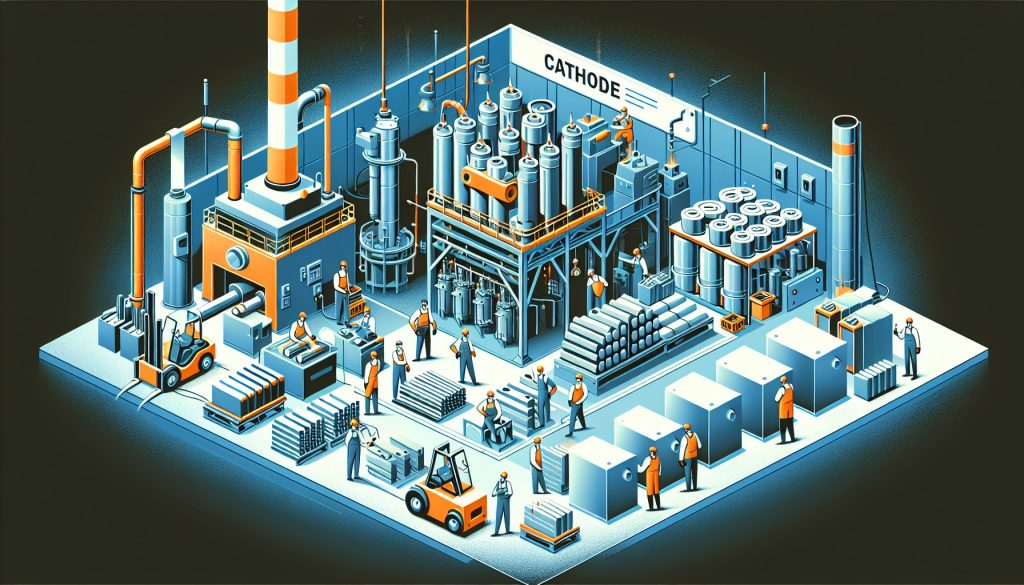
The global battery supply chain has reached a critical inflection point where traditional cathode manufacturer offtake agreements are being fundamentally restructured. As electric vehicle demand surges and supply chain vulnerabilities become increasingly apparent, manufacturers are adopting sophisticated new approaches to secure raw materials and guarantee delivery to downstream partners.
Understanding these evolving offtake dynamics has become essential for stakeholders across the lithium-ion battery ecosystem, from mining companies to automotive manufacturers. The strategic implications of these agreements now extend far beyond simple purchase commitments, encompassing supply security, price stability, and competitive positioning in a rapidly expanding market.
Understanding Modern Cathode Offtake Agreement Structures
Contemporary cathode manufacturer offtake agreements have evolved into complex, multi-layered contracts that address numerous supply chain risks. Unlike traditional procurement models, these agreements now typically include provisions for raw material price volatility, capacity allocation guarantees, and quality specifications that reflect advancing battery chemistry requirements.
Leading cathode manufacturers are increasingly structuring offtake agreements with built-in flexibility mechanisms. These include volume adjustment clauses that account for demand fluctuations, alternative delivery schedules during supply disruptions, and shared investment commitments in upstream mining projects. Major players like CATL, LG Energy Solution, and Panasonic have pioneered agreements that integrate backward into the supply chain, securing lithium, nickel, and cobalt supplies years in advance.
The financial terms of these agreements have also become more sophisticated, incorporating hedging mechanisms against commodity price swings and performance-based pricing that rewards supply reliability. This evolution reflects the industry’s maturation and the recognition that cathode material availability often represents the primary bottleneck in battery production scaling.
Supply Chain Risk Mitigation Through Strategic Partnerships
Cathode manufacturer offtake strategies now prioritize supply chain resilience over cost optimization alone. This shift has driven manufacturers to diversify their supplier base geographically and establish redundant supply pathways for critical raw materials. The concentration of lithium processing in China and nickel mining in Indonesia has prompted Western manufacturers to seek alternative supply sources, even at premium pricing.
Strategic partnerships have emerged as a preferred mechanism for securing long-term cathode supply. These relationships often involve joint ventures, technology sharing agreements, and co-investment in manufacturing capacity expansion. For instance, automotive manufacturers are increasingly taking equity stakes in cathode producers or establishing exclusive supply partnerships that guarantee priority access during supply shortages.
Risk mitigation extends beyond supplier diversification to include inventory management strategies, alternative chemistry development, and supply chain transparency initiatives. Advanced manufacturers now maintain detailed mapping of their supply chains down to individual mines, enabling rapid response to geopolitical disruptions or natural disasters that could affect production.
Market Dynamics Driving Offtake Evolution
The explosive growth in electric vehicle production has fundamentally altered cathode manufacturer offtake dynamics. Annual global cathode demand has more than tripled in recent years, creating a seller’s market where manufacturers can command premium pricing and favorable contract terms. This demand surge has extended typical contract durations from 1-2 years to 5-10 year agreements, providing manufacturers with revenue visibility while securing supply for buyers.
Regional market dynamics play an increasingly important role in offtake strategy development. The Inflation Reduction Act in the United States has created strong incentives for domestic cathode production, while European regulations favor suppliers with verified sustainable sourcing practices. These regional preferences are reshaping global offtake patterns and creating opportunities for manufacturers who can demonstrate compliance with local content requirements.
Technological advancement continues to influence cathode manufacturer offtake agreements as new battery chemistries emerge. The shift toward high-nickel cathodes and the development of lithium iron phosphate alternatives for cost-sensitive applications requires flexible offtake agreements that can adapt to changing chemistry preferences without compromising supply security.
Future Outlook for Cathode Manufacturing Partnerships
The trajectory of cathode manufacturer offtake agreements points toward even deeper integration between supply chain participants. Vertical integration initiatives are accelerating, with battery manufacturers investing directly in cathode production facilities and cathode manufacturers securing upstream mining assets. This trend suggests that traditional arm’s-length offtake agreements may evolve into integrated ownership structures.
Sustainability considerations are becoming central to offtake agreement negotiations, with buyers increasingly demanding verification of responsible sourcing practices and carbon footprint reduction commitments. This emphasis on environmental, social, and governance factors is creating competitive advantages for manufacturers who can demonstrate superior sustainability performance throughout their supply chains.
Digital technologies are also transforming cathode manufacturer offtake management through real-time supply chain visibility, predictive analytics for demand forecasting, and blockchain-based provenance tracking. These technological capabilities enable more dynamic contract terms and performance-based agreements that can adapt to changing market conditions.
As the battery industry continues its rapid expansion, cathode manufacturer offtake strategies will remain a critical determinant of competitive success. Companies that can secure reliable, cost-effective supply relationships while maintaining operational flexibility will be best positioned to capitalize on the ongoing energy storage revolution. The evolution of these agreements reflects not just market maturation, but the industry’s recognition that supply chain excellence has become as important as technological innovation in determining market leadership.