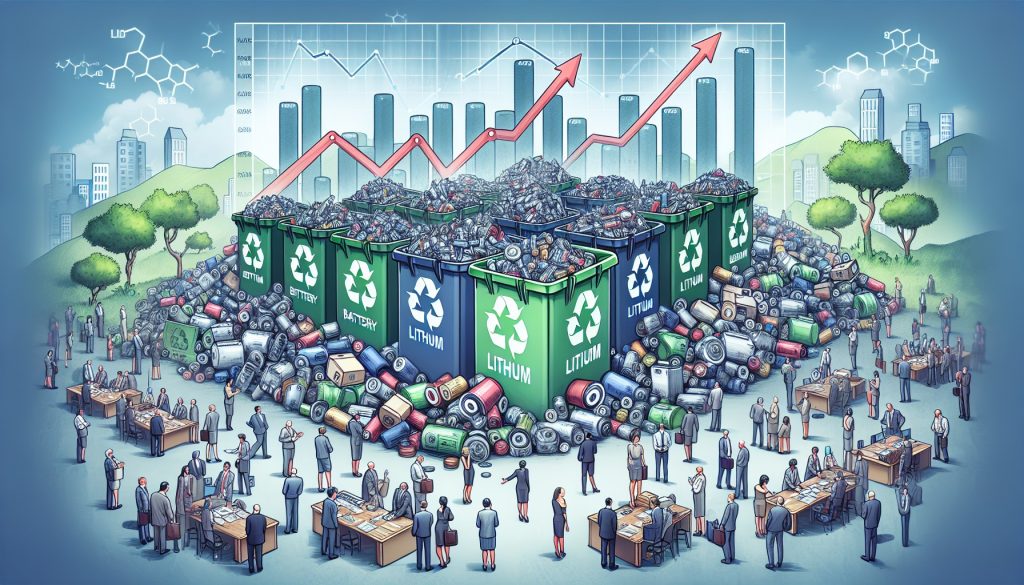
The electric vehicle revolution is hitting a critical inflection point, but not for the reasons most industry observers anticipated. While automakers race to build gigafactories and governments pledge ambitious electrification targets, a quieter transformation is reshaping the entire ecosystem from within. The recycled lithium market has evolved from an environmental afterthought into a strategic cornerstone that’s fundamentally altering the economics of electric vehicle production.
Traditional lithium extraction faces mounting challenges that extend far beyond environmental concerns. Primary lithium mining requires enormous water resources, often in regions already experiencing water stress, while new mine development can take a decade or more to reach full production. These constraints have created a supply bottleneck that threatens to slow EV adoption just as consumer demand reaches critical mass. The recycled lithium market offers a compelling alternative that’s both economically attractive and operationally scalable.
Recent technological breakthroughs have transformed lithium recovery from end-of-life batteries into a highly efficient process. Advanced hydrometallurgical techniques now recover over 95% of lithium from used batteries, compared to less than 50% just five years ago. This dramatic improvement has made recycled lithium cost-competitive with freshly mined material, while delivering it to market in months rather than years. Major battery manufacturers report that recycled lithium performs identically to virgin material in new battery cells, eliminating any performance trade-offs that previously limited adoption.
The economics driving the recycled lithium market have shifted dramatically as the first generation of electric vehicles reaches end-of-life status. Early Tesla Model S vehicles and Nissan Leafs are now entering recycling facilities in meaningful volumes, creating a growing feedstock for lithium recovery operations. Industry analysts project that by 2030, recycled sources could supply up to 25% of global lithium demand for battery production, reducing pressure on traditional mining operations and providing price stability for automakers.
Tesla’s Nevada Gigafactory exemplifies how major manufacturers are integrating recycled lithium into their supply chains. The facility now processes thousands of battery packs monthly, recovering not just lithium but also cobalt, nickel, and other critical materials. This closed-loop approach reduces raw material costs by an estimated 15-20% while dramatically shrinking the environmental footprint of battery production. Similar facilities are rapidly expanding across North America, Europe, and Asia as automakers recognize the strategic value of controlling their own material recovery operations.
Geographic advantages of the recycled lithium market are reshaping global supply chain strategies. Unlike lithium mining, which concentrates in a handful of countries, battery recycling can occur wherever significant EV populations exist. This distributed model reduces transportation costs, eliminates geopolitical supply risks, and creates local green jobs in major automotive markets. The European Union’s battery regulation requiring specific recycled content quotas has accelerated this trend, making domestic recycling capacity a competitive necessity rather than an environmental luxury.
Consumer electronics represent another massive opportunity within the recycled lithium market that extends well beyond automotive applications. Smartphones, laptops, and other devices contain substantial lithium quantities in relatively concentrated forms, making them ideal candidates for efficient recovery. Apple’s robot Daisy can disassemble 1.2 million iPhones annually, recovering materials including lithium for return to the supply chain. This cross-industry collaboration between technology companies and automotive manufacturers is creating unexpected economies of scale in lithium recycling.
Investment capital is flowing rapidly into recycled lithium market infrastructure as venture capitalists and industrial giants recognize the sector’s potential. Battery recycling startups have raised over $2 billion in funding over the past 18 months, while established players like Umicore and Li-Cycle are expanding processing capacity by 400-500% to meet growing demand. This capital influx is accelerating technology development and driving down processing costs at a pace that’s surprised even industry insiders.
The quality advantages of recycled lithium are becoming increasingly apparent as processing technologies mature. Recycled material often exhibits superior purity compared to some mined sources, as the recovery process removes impurities that can affect battery performance. This unexpected benefit has led several premium battery manufacturers to actively prefer recycled inputs for their highest-performance applications, completely inverting traditional assumptions about material hierarchy.
As the electric vehicle market approaches mainstream adoption, the recycled lithium market stands as a testament to how circular economy principles can solve seemingly intractable industrial challenges. The convergence of technological capability, economic incentive, and environmental necessity has created a perfect storm that’s transforming waste into strategic advantage. For an industry built on the promise of sustainability, closing the lithium loop represents more than operational efficiency—it’s the fulfillment of the electric vehicle revolution’s fundamental promise to build a cleaner, more resilient energy future.