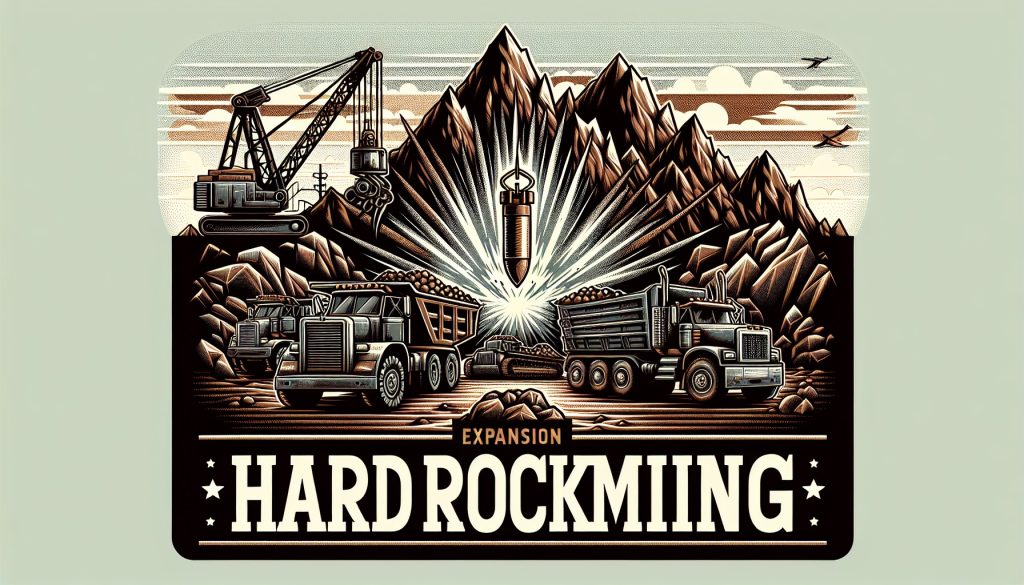
Global hard rock mining operations are experiencing unprecedented growth momentum, with major producers reporting substantial increases in extraction volumes and operational capacity. This surge in activity has captured the attention of institutional investors and market analysts who are closely monitoring the sector’s evolving landscape and its broader economic implications.
The current wave of hard rock mining expansion encompasses multiple commodity categories, with lithium, copper, gold, and rare earth elements leading the charge. Mining companies across Australia, Canada, Chile, and South Africa have collectively announced capacity increases exceeding 40% compared to previous operational benchmarks. These expansions are driven by robust demand from technology manufacturers, renewable energy infrastructure projects, and traditional industrial applications.
Production data from leading mining corporations reveals a compelling narrative of operational efficiency gains and strategic resource allocation. Barrick Gold Corporation recently reported a 28% increase in quarterly output from its hard rock facilities, while Freeport-McMoRan’s copper extraction operations have exceeded projected targets by significant margins. These performance indicators suggest that the hard rock mining expansion is not merely about scaling operations but optimizing existing infrastructure to maximize yield per ton of processed material.
Investor sentiment surrounding this sector expansion has been notably positive, with mining-focused exchange-traded funds experiencing substantial inflows over recent months. Portfolio managers are particularly drawn to companies demonstrating sustainable extraction practices alongside production growth, recognizing that environmental compliance and operational efficiency are becoming inseparable factors in long-term profitability assessments.
Technological advancement plays a crucial role in enabling this hard rock mining expansion, with artificial intelligence-driven ore analysis, autonomous hauling systems, and precision drilling techniques reducing operational costs while increasing extraction precision. Companies investing heavily in these technologies are reporting lower per-unit production costs and improved safety metrics, factors that directly impact their market valuations and investor appeal.
Geographic diversification within the hard rock mining expansion presents both opportunities and challenges for investors. While operations in politically stable regions like Australia and Canada offer predictable regulatory environments, emerging mining projects in South America and Africa provide potentially higher returns alongside elevated risk profiles. This dynamic is reshaping investment strategies as fund managers seek optimal risk-adjusted returns across different jurisdictions.
Market analysts project that the current hard rock mining expansion cycle will continue through the next several years, supported by sustained demand from electric vehicle manufacturers, renewable energy projects, and traditional industrial consumers. Supply chain considerations have become increasingly important, with mining companies establishing strategic partnerships closer to end-user markets to reduce transportation costs and delivery timeframes.
The ripple effects of this expansion extend beyond mining companies themselves, benefiting equipment manufacturers, logistics providers, and specialized service companies. Caterpillar, Komatsu, and other heavy machinery producers have reported increased order volumes from mining clients, while shipping companies specializing in bulk commodities are experiencing improved capacity utilization rates and pricing power.
For investors evaluating opportunities within this expanding sector, key performance indicators include production cost per ounce or ton, reserve replacement ratios, environmental compliance records, and management’s track record in executing large-scale operational expansions. Companies demonstrating consistent improvements across these metrics are positioning themselves as preferred investment vehicles for both institutional and retail investors seeking exposure to commodity markets.
The current hard rock mining expansion represents more than a cyclical upturn in commodity markets; it reflects a fundamental shift toward resource-intensive technologies and infrastructure development that will define economic growth patterns for years to come. Investors who understand these underlying drivers and carefully evaluate individual company fundamentals within this expanding sector may find compelling opportunities to participate in this significant industrial transformation.