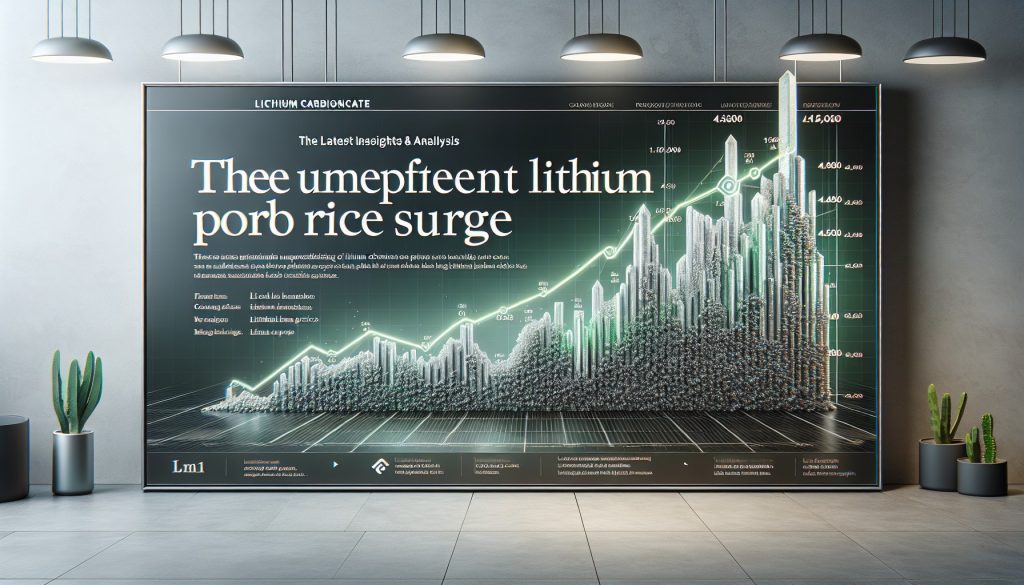
The global battery metals market is witnessing unprecedented volatility as lithium carbonate prices reach historic highs, fundamentally altering the landscape for electric vehicle manufacturers, energy storage companies, and technology giants worldwide. This dramatic lithium carbonate price surge represents more than a temporary market fluctuation—it signals a structural shift that’s forcing entire industries to reassess their supply chain strategies, manufacturing costs, and long-term sustainability plans.
Market participants are grappling with price increases exceeding 300% over the past 18 months, creating ripple effects that extend far beyond mining operations into consumer electronics, automotive manufacturing, and renewable energy infrastructure. The implications of this pricing transformation are reshaping investment priorities, accelerating recycling initiatives, and spurring innovation in alternative battery chemistries across multiple sectors.
Supply-Demand Imbalance Fuels Market Volatility
The current lithium carbonate price surge stems from a perfect storm of supply constraints and exponential demand growth that market analysts describe as the most severe imbalance in commodity markets since rare earth disruptions over a decade ago. Global lithium production capacity remains concentrated among a handful of producers, primarily in Australia, Chile, and Argentina, while demand from electric vehicle manufacturers has accelerated beyond industry projections.
Production bottlenecks at major extraction facilities have compounded supply issues, with several key operations experiencing technical challenges and regulatory delays. Environmental permitting processes for new lithium projects now average 7-10 years, creating a structural lag between demand recognition and production capacity expansion. Meanwhile, electric vehicle sales continue surging globally, with battery manufacturers requiring increasingly large volumes of battery-grade lithium carbonate to meet automotive industry commitments.
Weather-related disruptions in South America’s lithium triangle have further constrained supply, as extreme weather events affect brine extraction operations. These climate impacts underscore the vulnerability of current lithium supply chains and highlight the urgent need for geographical diversification in production sources.
Industrial Impact Across Battery Manufacturing Sectors
Manufacturing companies across the battery ecosystem are implementing dramatic cost management strategies in response to the lithium carbonate price surge, with some producers reporting raw material costs now representing over 70% of total battery cell production expenses. Automotive manufacturers are particularly vulnerable, as battery packs typically account for 30-40% of electric vehicle manufacturing costs, making lithium pricing a critical factor in EV affordability and market adoption rates.
Energy storage system developers face similar pressures, with grid-scale battery projects experiencing significant cost overruns due to lithium price volatility. Several major utility-scale installations have been delayed or restructured as project economics deteriorate under current pricing conditions. Consumer electronics manufacturers are also feeling the impact, with smartphone and laptop producers exploring alternative battery chemistries to reduce dependence on lithium-ion technologies.
The price surge has accelerated consolidation within the battery supply chain, as companies seek vertical integration to secure material access. Several automakers have announced direct investments in lithium mining operations, while battery manufacturers are establishing long-term offtake agreements at premium pricing to guarantee supply security.
Strategic Responses and Market Adaptation
Industry leaders are implementing multifaceted strategies to navigate the ongoing lithium carbonate price surge, with recycling initiatives emerging as a critical component of supply chain resilience. Battery recycling capacity is expanding rapidly, with new facilities targeting recovery rates exceeding 95% for lithium content from end-of-life batteries.
Research and development investments in alternative battery chemistries have intensified, with sodium-ion, iron-phosphate, and solid-state technologies receiving increased funding. While these alternatives may not immediately replace lithium-ion dominance, they provide potential hedging opportunities against continued lithium price volatility. Several manufacturers are already incorporating lower-lithium battery designs into product roadmaps for cost-sensitive applications.
Financial markets are responding with increased capital allocation toward lithium exploration and extraction projects, though the long lead times for production capacity expansion mean supply relief may not materialize for several years. Investment in lithium extraction technology innovation, including direct lithium extraction methods that could access previously uneconomic reserves, represents another avenue for medium-term supply expansion.
Future Market Dynamics and Price Projections
Market intelligence indicates the lithium carbonate price surge may persist longer than initially anticipated, with structural factors suggesting elevated pricing could become the new normal rather than a temporary disruption. Demand projections for electric vehicles continue rising as governments worldwide implement increasingly aggressive decarbonization targets, while grid-scale energy storage deployment accelerates to support renewable energy integration.
Geopolitical considerations are adding complexity to lithium markets, as nations recognize battery materials as strategically critical resources. Trade policies, export restrictions, and national security considerations are influencing supply chain decisions beyond traditional economic factors. This geopolitical dimension suggests price volatility may remain elevated even as production capacity eventually expands.
Technology developments in extraction efficiency and processing capabilities offer hope for eventual supply relief, though the timeline for meaningful impact remains uncertain. Advanced extraction techniques could unlock lower-grade deposits previously considered uneconomic, potentially expanding the global resource base available for development.
The lithium carbonate pricing crisis represents a defining moment for the global transition to electrification, testing the resilience and adaptability of industries built around lithium-ion battery technology. While current market conditions present significant challenges, they’re also catalyzing innovation, investment, and strategic thinking that may ultimately strengthen the long-term sustainability of battery-dependent industries. Companies that successfully navigate this period through strategic planning, supply chain diversification, and technological innovation will emerge better positioned for the next phase of the energy transition.