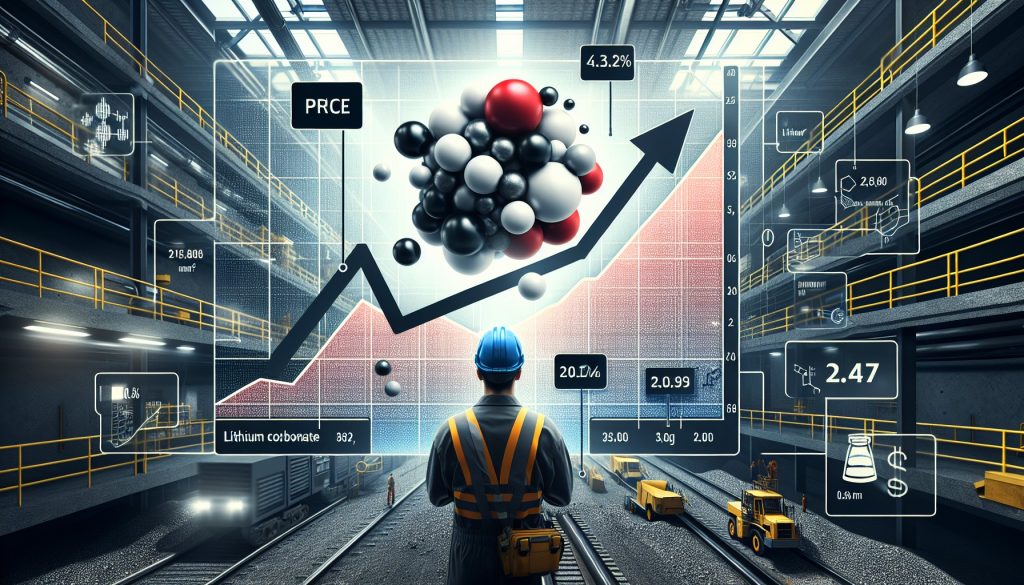
Battery manufacturers worldwide are grappling with an unprecedented challenge that threatens to reshape the entire industry landscape. The recent lithium carbonate price surge has reached levels that are forcing companies to fundamentally reconsider their production strategies, supply chain relationships, and long-term business models. This dramatic price escalation isn’t just a temporary market fluctuation—it represents a critical inflection point that could determine which companies survive and thrive in the evolving battery ecosystem.
Supply Chain Disruptions Drive Unprecedented Price Volatility
The lithium carbonate price surge stems from a perfect storm of supply chain disruptions that have created severe market imbalances. Mining operations in key lithium-producing regions have faced significant challenges, from environmental regulations to labor shortages and infrastructure limitations. Argentina’s salt flat operations have experienced weather-related delays, while Australian hard rock mining facilities have struggled with equipment maintenance and skilled worker availability. These production bottlenecks have coincided with explosive demand growth from the electric vehicle sector, creating a supply-demand mismatch that has sent prices soaring beyond industry expectations. The situation has been further complicated by geopolitical tensions affecting trade routes and export policies, making it increasingly difficult for battery manufacturers to secure stable, cost-effective lithium supplies.
Manufacturing Cost Pressures Reshape Industry Dynamics
Battery manufacturers are experiencing intense margin compression as the lithium carbonate price surge directly impacts their production economics. Lithium carbonate typically represents 15-20% of total battery cell costs, meaning that price increases translate immediately into reduced profitability unless companies can pass costs through to customers. However, many manufacturers are locked into long-term contracts with automakers and electronics companies, leaving them unable to adjust pricing in real-time. This has forced industry leaders to explore alternative strategies, including vertical integration through direct investments in mining operations, development of lithium recycling capabilities, and acceleration of research into alternative battery chemistries that require less lithium. Some companies have also begun implementing more sophisticated hedging strategies and entering into strategic partnerships with mining companies to secure preferential pricing and supply guarantees.
Technology Innovation Accelerates as Response to Price Pressures
The lithium carbonate price surge has become a powerful catalyst for technological innovation across the battery manufacturing sector. Research and development teams are intensifying efforts to optimize lithium utilization in existing battery designs, with some achieving 10-15% reductions in lithium content without compromising performance. Meanwhile, alternative battery technologies are gaining renewed attention and investment, including sodium-ion batteries, lithium iron phosphate (LFP) chemistries that use less lithium carbonate, and solid-state batteries that promise higher energy density with reduced material requirements. Companies are also investing heavily in lithium extraction and processing technologies that could unlock previously uneconomical lithium sources, including brine processing improvements and direct lithium extraction methods that could increase yield rates and reduce environmental impact.
Strategic Adaptations Determine Competitive Positioning
Forward-thinking battery manufacturers are viewing the lithium carbonate price surge as an opportunity to establish competitive advantages through strategic positioning and operational excellence. Industry leaders are diversifying their supplier bases across multiple geographic regions to reduce concentration risk and improve supply security. Some companies are forming joint ventures with mining companies or making direct investments in lithium projects to secure long-term supply at predictable costs. Additionally, manufacturers are implementing more sophisticated inventory management systems and demand forecasting capabilities to optimize their lithium procurement strategies. The companies that successfully navigate these challenges are likely to emerge with stronger market positions, more resilient supply chains, and enhanced technological capabilities that will serve them well as the battery industry continues to evolve and mature.
The lithium carbonate price surge represents more than just a cost challenge for battery manufacturers—it’s a fundamental market signal that is driving innovation, strategic thinking, and industry transformation. Companies that respond proactively with diversified supply strategies, technological innovation, and operational excellence will be best positioned to thrive in this new environment. Those that fail to adapt quickly may find themselves at a permanent disadvantage as the industry consolidates around players with superior cost structures and supply chain resilience.