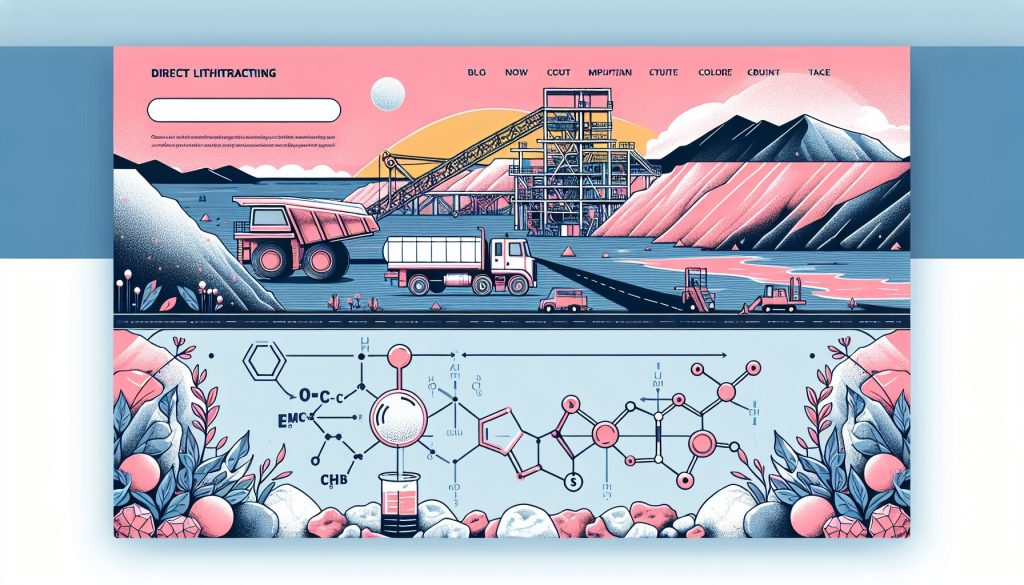
The lithium mining industry stands at a pivotal crossroads as direct lithium extraction technology emerges from experimental phases into commercial reality, fundamentally reshaping how the world’s most coveted battery metal reaches global markets. With lithium prices maintaining elevated levels despite recent volatility, mining companies are racing to deploy these revolutionary extraction methods that promise to unlock previously inaccessible reserves while dramatically reducing environmental impact.
Direct lithium extraction represents a paradigm shift from traditional evaporation pond methods that can take 12 to 18 months to produce battery-grade lithium carbonate. These new technologies, including selective ion exchange, membrane separation, and advanced sorbent systems, can extract lithium from brine sources in hours rather than months, achieving recovery rates exceeding 90% compared to the 30-50% efficiency of conventional methods. Major operators including Albemarle, SQM, and emerging players like Summit Nanotech are investing billions in scaling these technologies across operations in Chile’s Atacama Desert, Nevada’s Clayton Valley, and Argentina’s lithium triangle.
Recent market data reveals that direct lithium extraction projects have attracted over $3.2 billion in venture capital and strategic investments since 2024, with deployment accelerating as battery manufacturers demand more sustainable supply chains. The technology’s appeal extends beyond efficiency gains, addressing critical water usage concerns that have plagued traditional lithium mining operations. While conventional evaporation methods consume approximately 500,000 gallons of water per ton of lithium, direct lithium extraction processes can reduce water consumption by up to 95%, a crucial advantage in arid regions where most high-grade lithium brines are located.
The competitive landscape for direct lithium extraction has intensified as established mining giants compete with specialized technology companies developing proprietary solutions. Lilac Solutions has garnered significant attention with its ion exchange technology, securing partnerships with Lake Resources and Controlled Thermal Resources for major North American projects. Meanwhile, Summit Nanotech’s membrane-based approach has attracted backing from Equinor and other energy majors seeking to diversify into critical minerals. These partnerships signal growing confidence that direct lithium extraction can achieve the scale and cost economics necessary to compete with traditional methods.
Regulatory momentum is building behind direct lithium extraction adoption as governments prioritize domestic lithium production for energy security. The United States Department of Energy has allocated substantial grants to companies developing these technologies on federal lands, while Chile’s government has signaled preference for extraction methods that minimize environmental impact in future lithium concession awards. European Union initiatives are similarly favoring direct lithium extraction projects as part of broader critical raw materials strategies designed to reduce dependence on Chinese battery supply chains.
Market analysts project that direct lithium extraction could supply up to 25% of global lithium demand within the next five years, with costs falling below traditional mining methods as technologies mature and achieve economies of scale. The International Energy Agency estimates that lithium demand will increase sixfold by 2030, driven by electric vehicle adoption and grid-scale energy storage deployment. Direct lithium extraction’s ability to bring new supply online rapidly positions it as a critical solution to projected supply shortfalls that have concerned automotive manufacturers and battery producers.
Financial markets have responded enthusiastically to direct lithium extraction developments, with several pure-play technology companies achieving substantial valuations despite limited commercial production. However, investors remain cautious about execution risks, particularly around scaling laboratory successes to industrial-scale operations. Recent pilot project results from Controlled Thermal Resources’ Hell’s Kitchen facility in California have demonstrated commercial viability, producing battery-grade lithium carbonate that meets automotive industry specifications while maintaining projected cost targets.
The integration of direct lithium extraction with renewable energy sources presents additional market opportunities as companies seek to create fully sustainable lithium production chains. Geothermal-powered direct lithium extraction projects, particularly in Nevada’s geothermal corridor, exemplify this convergence of clean energy and critical mineral production. These projects can potentially achieve carbon-negative lithium production while generating renewable electricity, creating multiple revenue streams that improve project economics and appeal to ESG-focused investors.
As direct lithium extraction technologies prove their commercial viability and scale toward meaningful production volumes, they represent more than technological innovation—they embody a fundamental transformation of how critical materials are sourced for the clean energy transition. The success of these pioneering projects will determine whether the lithium industry can meet unprecedented demand while adhering to increasingly stringent environmental and social standards that define sustainable mining in the modern era.
