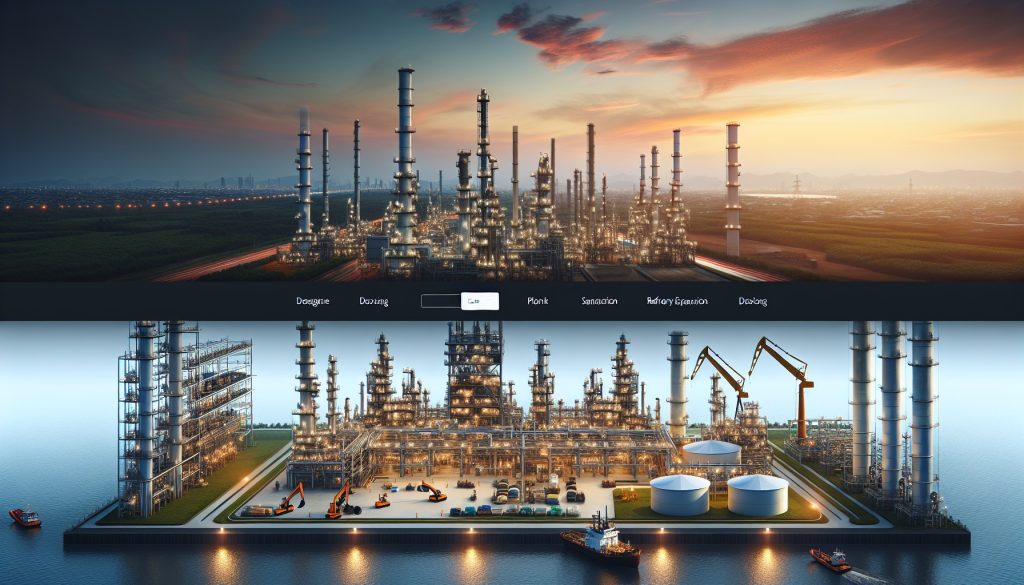
The global energy landscape is experiencing a transformational wave as major refinery expansion projects reach critical milestones, promising to reshape petroleum processing capacity worldwide. Recent refinery expansion news indicates unprecedented investment levels, with industry leaders committing billions toward modernization and capacity increases that could fundamentally alter supply chains and market dynamics.
These developments come at a crucial juncture when global energy demand continues rising while environmental regulations become increasingly stringent. Refineries are responding with sophisticated expansion strategies that balance operational efficiency, environmental compliance, and market positioning.
Breakthrough Technologies Driving Modern Refinery Expansions
Today’s refinery expansion projects incorporate cutting-edge technologies that represent quantum leaps from traditional processing methods. Advanced catalytic systems are enabling higher conversion rates while reducing energy consumption by up to 15%. Digital twin technology allows operators to simulate and optimize expansion processes before physical implementation, significantly reducing project risks and timelines.
Hydrocracking units featuring next-generation catalyst systems are central to many expansion plans, enabling refineries to process heavier crude oils while producing higher yields of valuable light products. These technological advances are particularly significant for facilities targeting increased diesel and jet fuel production, responding to robust transportation sector demand.
Integration of artificial intelligence and machine learning systems is revolutionizing operational efficiency during expansion phases. Real-time monitoring capabilities ensure optimal performance during the critical transition periods when new units come online alongside existing infrastructure.
Investment Patterns and Financial Implications
Current refinery expansion news reveals investment patterns exceeding $200 billion globally, with projects spanning diverse geographical regions and operational scales. Middle Eastern facilities are leading capacity increases, with several projects targeting million-barrel-per-day processing capabilities. These mega-projects represent strategic positioning for long-term market dominance.
Asian markets are experiencing particularly robust expansion activity, driven by growing regional demand and export opportunities. Investment flows indicate strong confidence in petroleum product demand sustainability, despite renewable energy growth. Financial analysts note that modern expansion projects emphasize flexibility, allowing facilities to adapt product slates based on market conditions.
Private equity and sovereign wealth funds are increasingly participating in refinery expansion financing, recognizing the strategic value of processing infrastructure. This diversified funding approach is enabling more ambitious projects while spreading financial risks across multiple stakeholder groups.
Regulatory Compliance and Environmental Innovation
Environmental considerations are fundamentally shaping refinery expansion strategies, with new facilities incorporating advanced emission control systems and waste reduction technologies. Latest expansion projects feature carbon capture capabilities, positioning operators for future regulatory requirements while demonstrating environmental stewardship.
Sulfur reduction technologies are standard components in current expansion plans, ensuring compliance with international fuel quality standards. Water treatment and recycling systems represent significant portions of expansion budgets, reflecting industry commitment to resource conservation and environmental protection.
Integration of renewable energy sources within expansion projects is becoming increasingly common, with solar and wind power supplementing traditional energy sources for refinery operations. These hybrid approaches reduce operational costs while improving environmental profiles.
Market Positioning and Strategic Implications
Strategic market positioning drives many expansion decisions, with companies targeting specific product markets and geographical regions. Petrochemical integration represents a key trend, with expansion projects incorporating chemical processing capabilities alongside traditional fuel production. This diversification strategy enhances profitability while reducing exposure to volatile fuel markets.
Export-oriented expansion projects are particularly significant, with facilities designed to serve regional and international markets. Strategic location selection ensures access to crude oil supplies and product distribution networks, maximizing operational efficiency and market reach.
Competition among regional processing hubs is intensifying, with expansion projects serving as competitive weapons for market share gains. Companies are investing heavily in logistics infrastructure alongside processing capacity, ensuring comprehensive supply chain control.
The momentum behind refinery expansion news reflects fundamental industry confidence in petroleum product demand sustainability and technological advancement capabilities. These massive infrastructure investments will influence global energy markets for decades, establishing new competitive dynamics while advancing operational efficiency standards. Success in navigating this expansion cycle will determine which companies emerge as industry leaders in an evolving energy landscape where technical excellence and strategic positioning converge to create lasting competitive advantages.