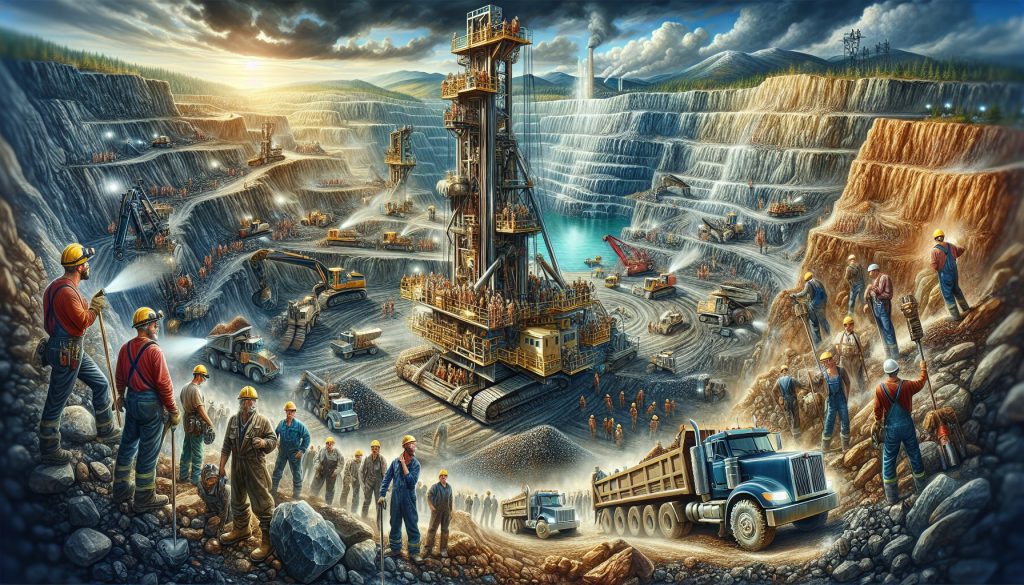
While the world fixates on electric vehicle sales figures and battery technology breakthroughs, a quieter revolution is unfolding beneath the surface. The lithium industry stands at a critical inflection point where traditional extraction methods are giving way to a more aggressive approach: hard rock mining expansion. This fundamental shift in how the world’s most coveted battery metal is extracted has captured the attention of institutional investors and mining giants alike, creating ripple effects across global commodity markets.
The lithium landscape has historically been dominated by brine extraction operations in South America’s “Lithium Triangle,” where mineral-rich saltwater is pumped from underground reservoirs and left to evaporate in massive ponds. However, this process requires 12 to 24 months to produce lithium carbonate, creating supply bottlenecks that have frustrated manufacturers desperate to secure stable lithium supplies. Hard rock mining expansion offers a compelling alternative, with spodumene deposits that can be processed into lithium hydroxide within weeks rather than months.
Australia has emerged as the epicenter of this hard rock mining expansion, with Western Australia’s Pilbara region now producing more than half of the world’s lithium supply. Major operations like Greenbushes, operated by Talison Lithium, and newer entrants such as Pilbara Minerals have demonstrated that hard rock lithium extraction can achieve production scales previously thought impossible. These operations are processing millions of tons of ore annually, with some facilities expanding their capacity by 300% over the past three years.
The economics driving hard rock mining expansion have fundamentally shifted investor sentiment. Unlike brine operations that require massive upfront infrastructure investments and face geological uncertainties, hard rock deposits offer more predictable ore grades and faster time-to-market cycles. Mining companies can utilize existing crushing, grinding, and flotation technologies, adapting proven mineral processing techniques to lithium extraction. This operational familiarity has attracted traditional mining investors who previously avoided lithium plays due to the specialized nature of brine extraction.
North American markets are witnessing particularly aggressive hard rock mining expansion initiatives. Canada’s Quebec province has become a hotbed of activity, with companies like Sayona Mining advancing multiple spodumene projects simultaneously. The region’s established mining infrastructure, skilled workforce, and proximity to North American battery manufacturers create compelling value propositions for investors seeking exposure to domestic lithium supply chains. Similar dynamics are playing out across the United States, where hard rock mining expansion projects in Nevada, North Carolina, and Maine are attracting significant capital commitments.
The geopolitical implications of hard rock mining expansion cannot be understated. As governments worldwide prioritize supply chain security for critical minerals, countries with substantial hard rock lithium deposits are positioning themselves as strategic alternatives to traditional brine-producing regions. This geographic diversification reduces concentration risk and provides battery manufacturers with multiple sourcing options, a consideration that has become paramount following recent supply chain disruptions across various industries.
Environmental considerations are also reshaping investor perspectives on hard rock mining expansion. While mining operations inherently involve land disturbance, hard rock lithium extraction typically requires significantly less water than brine operations, which can consume up to 500,000 gallons of water per ton of lithium produced. In water-scarce regions like the Atacama Desert, this water intensity has raised sustainability concerns among environmentally conscious investors and local communities. Hard rock mining expansion offers a pathway to lithium production with more manageable environmental footprints.
The technological advancement in hard rock processing has accelerated investor interest considerably. Direct lithium extraction techniques, combined with improved sorting and concentration methods, have increased recovery rates while reducing processing costs. Some operations now achieve lithium recovery rates exceeding 80%, compared to historical averages of 60-70%. These efficiency gains translate directly into improved project economics and higher investor returns, making hard rock mining expansion increasingly attractive from a purely financial perspective.
Market dynamics suggest that hard rock mining expansion will continue dominating lithium industry growth trajectories. With electric vehicle adoption accelerating globally and energy storage markets expanding rapidly, lithium demand projections indicate supply deficits persisting through the next decade. Hard rock operations can scale production more rapidly than brine facilities, positioning these projects as critical solutions to bridging supply-demand imbalances. Investors recognize this timing advantage as a significant competitive moat in an industry where being first to market often determines long-term profitability.
The convergence of favorable economics, technological improvements, geopolitical advantages, and accelerating demand has created a perfect storm for hard rock mining expansion across global lithium markets. As traditional mining companies pivot toward lithium and specialized lithium producers expand their operational footprints, the industry landscape continues evolving at breakneck speed. For investors seeking exposure to the lithium revolution, understanding the implications of this hard rock mining expansion represents not just an opportunity, but a necessity for navigating the complex dynamics shaping tomorrow’s energy infrastructure.
