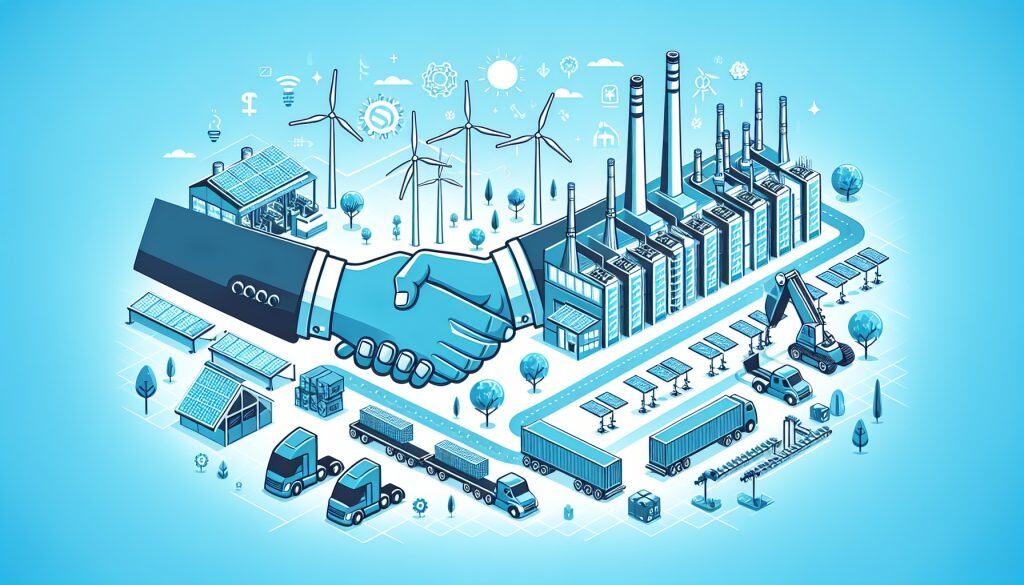
The electric vehicle revolution isn’t just happening on our roads—it’s being orchestrated in massive manufacturing facilities that span millions of square feet. At the heart of this transformation lies a complex web of strategic partnerships and agreements that determine who controls the future of transportation. These gigafactory supply deals are quietly reshaping entire industries, creating new economic powerhouses, and accelerating the global shift away from fossil fuels.
From Tesla’s pioneering Nevada facility to Ford’s ambitious BlueOval SK partnerships, the scale and sophistication of these manufacturing agreements have reached unprecedented levels. The numbers tell a compelling story: global battery gigafactory capacity has expanded by over 400% since 2020, with supply agreements worth hundreds of billions of dollars reshaping how automakers approach production.
The Economic Engine Behind Battery Manufacturing Partnerships
Every gigafactory supply deal represents far more than a simple buyer-seller relationship. These agreements typically span 10-15 years and involve intricate arrangements covering raw material sourcing, technology sharing, and production capacity allocation. Major automakers like General Motors, Ford, and Stellantis have committed over $120 billion collectively to secure their battery supply chains through these strategic partnerships.
The financial structure of a typical gigafactory supply deal often includes upfront capital investments, volume commitments, and technology licensing fees. For instance, Ford’s partnership with SK Innovation involves a $11.4 billion joint investment, while GM’s Ultium Cells venture with LG Energy Solution represents a $6 billion commitment across multiple facilities. These massive investments demonstrate how critical supply security has become in the competitive EV landscape.
Raw Material Sourcing Strategies Driving Global Competition
Behind every successful gigafactory supply deal lies a sophisticated raw material strategy. Lithium, nickel, cobalt, and graphite—the essential components of modern EV batteries—have become the new oil in terms of geopolitical importance. Companies are increasingly pursuing vertical integration strategies, securing everything from mining rights to refining capacity.
Tesla’s multi-billion-dollar agreements with suppliers like Ganfeng Lithium and Compass Minerals exemplify this approach. Similarly, Ford has secured direct supply agreements with mining companies in Australia and Chile to ensure stable pricing and availability. These upstream partnerships have become so critical that many gigafactory supply deals now include specific provisions for raw material price volatility and supply disruptions.
Technology Transfer Agreements Accelerating Innovation
Modern gigafactory supply deals often function as innovation catalysts through embedded technology transfer provisions. These agreements typically include shared research and development initiatives, patent licensing arrangements, and collaborative engineering programs. The result is an acceleration of battery technology advancement that benefits entire supply chains.
LG Energy Solution’s partnerships with multiple automakers demonstrate this dynamic perfectly. Each gigafactory supply deal includes provisions for continuous technology upgrades, ensuring that battery performance improves throughout the contract duration. This collaborative approach has contributed to the 89% reduction in battery costs observed since 2010, making EVs increasingly competitive with traditional vehicles.
Regional Manufacturing Hubs Reshaping Global Supply Chains
Geographic strategy plays a crucial role in every major gigafactory supply deal. Automakers are increasingly prioritizing regional supply chain resilience, leading to the development of manufacturing clusters in key markets. North America, Europe, and Asia each represent distinct strategic considerations for supply chain planners.
The Inflation Reduction Act has particularly influenced gigafactory supply deals in North America, with domestic content requirements driving billions in new manufacturing investments. European automakers are responding similarly, with Volkswagen’s PowerCo subsidiary securing multiple supply agreements to establish regional battery independence. These regional strategies are creating new economic centers and reducing dependence on single-source suppliers.
Quality Control Standards Elevating Industry Benchmarks
Every gigafactory supply deal includes sophisticated quality control provisions that often exceed traditional automotive standards. Battery manufacturing requires precision measured in micrometers, with contamination control standards rivaling semiconductor fabrication. These requirements have elevated entire supply chains and created new categories of specialized suppliers.
The quality provisions in typical gigafactory supply deals include real-time monitoring systems, predictive maintenance requirements, and comprehensive traceability protocols. These standards ensure that batteries meet the safety and performance requirements essential for consumer acceptance while supporting warranty obligations that can extend up to 8 years or 150,000 miles.
Investment Opportunities Emerging from Supply Chain Evolution
The gigafactory supply deal ecosystem has created numerous investment opportunities across multiple sectors. From specialized equipment manufacturers to raw material processors, entire industries are experiencing growth driven by battery manufacturing expansion. Many of these opportunities remain under-recognized by traditional investment analysis.
Equipment suppliers like Applied Materials and Panasonic have seen substantial growth from gigafactory supply deals, while newer companies focusing on battery recycling and materials processing are emerging as potential long-term winners. The complexity of these supply chains suggests that specialized service providers and technology companies will continue finding new niches within this expanding ecosystem.
The gigafactory supply deal phenomenon represents one of the most significant industrial transformations of our time. These agreements are not merely commercial contracts—they’re the architectural blueprints for a sustainable transportation future. As battery technology continues evolving and global EV adoption accelerates, the strategic importance of these manufacturing partnerships will only intensify.
For investors, industry professionals, and policymakers, understanding gigafactory supply deals provides crucial insights into where the automotive industry is heading. Stay informed about these developments by following industry publications, monitoring public filings from major automakers, and tracking announcements from battery manufacturers. The companies and regions that master these complex supply relationships will ultimately determine who controls the electric vehicle revolution.
