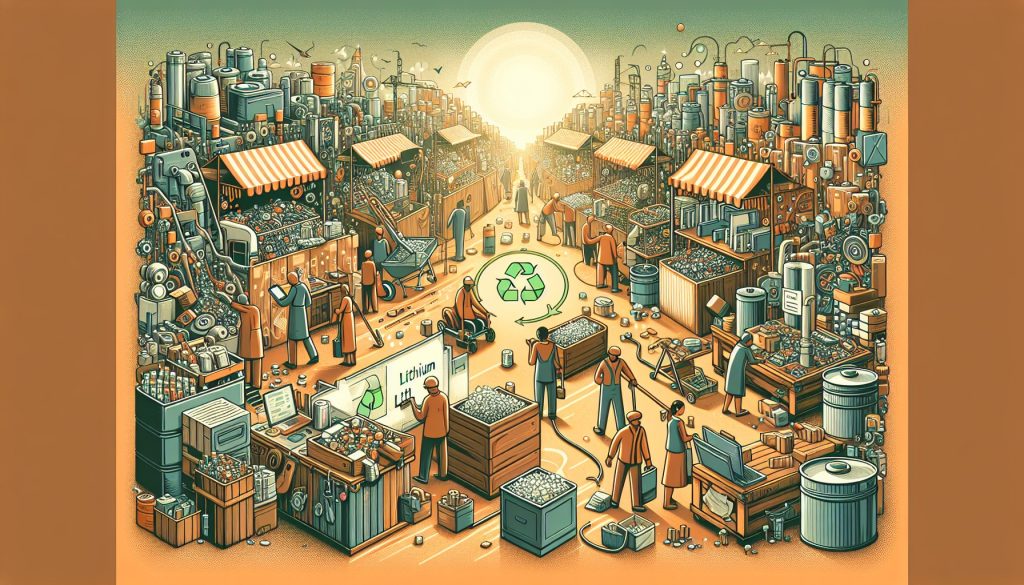
The electric vehicle revolution faces a critical bottleneck that most consumers never see: the finite supply of virgin lithium needed for battery production. While automakers race to meet ambitious electrification targets, a sophisticated recycled lithium market has emerged as the unsung hero powering sustainable transportation forward. This secondary supply chain now represents one of the most strategically important developments in clean energy infrastructure.
Traditional lithium extraction from brine pools and hard rock mining requires extensive time, capital investment, and environmental resources. The recycled lithium market offers a compelling alternative by recovering this precious metal from end-of-life batteries, manufacturing waste, and consumer electronics. Leading recycling facilities can now extract lithium with purity levels exceeding 99.5%, making recycled material virtually indistinguishable from freshly mined alternatives in battery performance.
Major automotive manufacturers have recognized this potential and integrated recycled lithium procurement into their supply chain strategies. Tesla’s Nevada Gigafactory processes thousands of tons of battery waste annually, while Volkswagen’s partnership with European recycling specialists has secured long-term access to recycled materials. These relationships provide cost stability and reduce dependence on volatile commodity markets that have seen lithium prices fluctuate by over 400% in recent cycles.
The economics driving recycled lithium market growth extend beyond price considerations. Environmental regulations in key markets increasingly favor circular economy approaches, with the European Union’s Battery Regulation requiring specific recycled content percentages in new batteries. Chinese manufacturers, controlling significant portions of global battery production, have invested heavily in domestic recycling capabilities to meet both regulatory requirements and supply security objectives.
Technological advances continue expanding recycled lithium market capabilities and efficiency. Hydrometallurgical processes now recover lithium from complex battery chemistries including lithium iron phosphate and nickel manganese cobalt formulations. Direct recycling methods preserve the crystalline structure of cathode materials, enabling multiple reuse cycles while maintaining energy density performance. These innovations reduce processing costs and energy consumption compared to traditional smelting approaches.
Supply chain resilience represents another critical factor accelerating recycled lithium adoption. Geopolitical tensions affecting traditional mining regions have highlighted the strategic vulnerability of relying solely on primary sources. The recycled lithium market provides geographic diversification, with processing facilities located closer to major automotive manufacturing hubs. This proximity reduces transportation costs and delivery timeframes while supporting regional economic development.
Market analysts project the recycled lithium market will experience compound annual growth rates exceeding 25% as battery waste volumes increase exponentially. The first generation of mass-market electric vehicles is approaching end-of-life status, creating unprecedented feedstock availability for recycling operations. Simultaneously, manufacturing scrap rates from rapidly scaling battery production provide immediate material streams for recycling facilities.
Investment capital continues flowing into recycling infrastructure, with venture funds and strategic investors committing billions toward expanding processing capacity. Startup companies developing innovative extraction technologies attract significant funding rounds, while established mining companies acquire recycling specialists to integrate circular economy capabilities. This financial backing accelerates technological development and facility construction timelines.
The recycled lithium market stands poised to become an indispensable pillar supporting electric vehicle mass adoption. By transforming waste into valuable raw materials, recycling operations address multiple challenges simultaneously: reducing environmental impact, improving supply security, and lowering production costs. As battery technology continues advancing and recycling processes become increasingly sophisticated, this circular approach to lithium supply will prove essential for achieving global electrification objectives while maintaining economic and environmental sustainability.