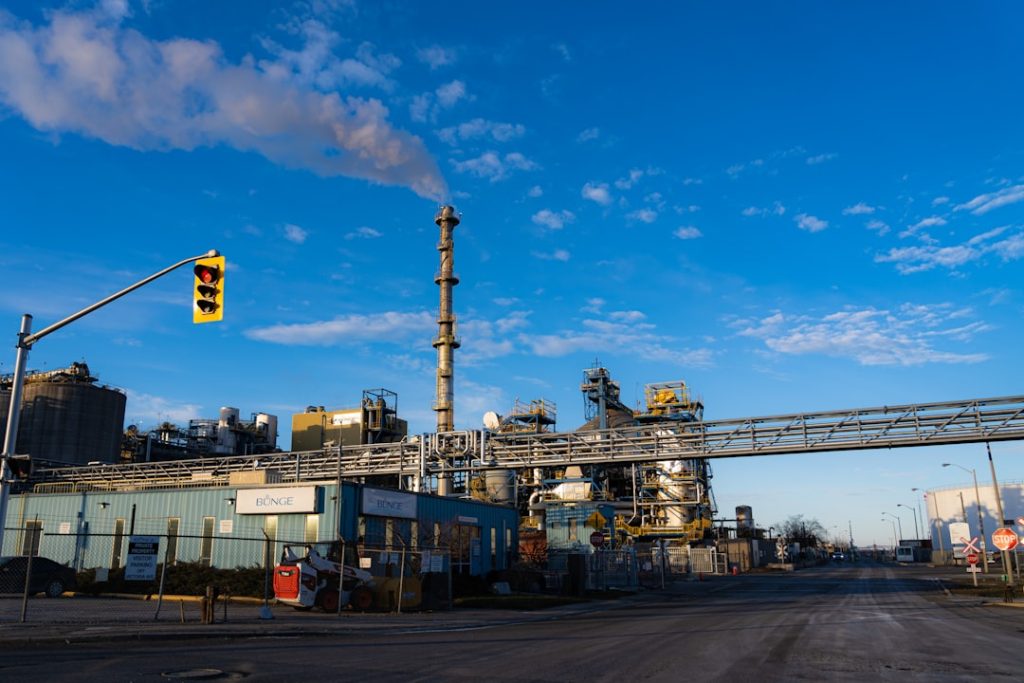
The global energy landscape is witnessing unprecedented transformation as major oil companies announce ambitious refinery expansion projects worth tens of billions of dollars. Recent refinery expansion news indicates that companies are doubling down on processing capacity despite ongoing energy transition discussions, signaling confidence in sustained hydrocarbon demand for decades to come.
Leading this surge is Saudi Aramco’s $20 billion expansion of its Jazan refinery complex, which will boost daily processing capacity by 400,000 barrels. The project represents the largest single refinery expansion announcement in the Middle East, incorporating advanced hydrocracking units and clean fuel production capabilities. This development positions Saudi Arabia to capture growing Asian petroleum product demand while establishing new export corridors to Africa and Europe.
Meanwhile, India’s Reliance Industries has committed $12 billion to expand its Jamnagar facility, already the world’s largest refinery complex. The expansion will add 300,000 barrels per day of processing capacity and integrate petrochemical production lines, creating one of the most sophisticated oil-to-chemicals facilities globally. Industry analysts project this expansion will generate $3.2 billion in annual revenue once operational, significantly boosting India’s energy security and export potential.
North American refinery expansion news centers on Marathon Petroleum’s $8 billion investment across three facilities in Texas and Louisiana. The company is installing advanced fluid catalytic cracking units designed to process heavier crude grades while producing higher-yield gasoline and diesel. This strategic positioning allows Marathon to capitalize on discounted heavy crude imports while meeting stringent environmental regulations through upgraded emission control systems.
The technical complexity of these modern expansions far exceeds traditional refinery construction. New facilities incorporate artificial intelligence for process optimization, advanced materials for corrosion resistance, and modular construction techniques that reduce installation timelines by 30%. ExxonMobil’s $7 billion Beaumont expansion exemplifies this trend, featuring digital twin technology that enables real-time performance monitoring and predictive maintenance protocols.
Investment implications extend beyond individual companies to broader market dynamics. Credit rating agencies have upgraded several major refiners, citing improved cash flow projections from expanded capacity and geographic diversification. Goldman Sachs estimates that current refinery expansion news announcements will generate $180 billion in cumulative capital expenditure through the next five years, supporting thousands of construction jobs and creating permanent operational positions.
Environmental considerations increasingly influence expansion designs, with companies investing heavily in carbon capture technology and renewable energy integration. Shell’s $5 billion Singapore expansion incorporates solar panels capable of generating 40% of facility power requirements, while Chevron’s Richmond project includes the largest industrial carbon capture system in California.
Geopolitical factors also drive expansion decisions, as companies seek to reduce dependence on volatile supply chains. China National Petroleum Corporation’s $15 billion domestic expansion program aims to process 500,000 additional barrels daily, reducing reliance on refined product imports and strengthening energy independence.
The current wave of refinery expansion news reflects sophisticated market analysis suggesting robust demand through 2040, particularly in developing economies where vehicle ownership continues rising. These massive infrastructure investments represent a calculated bet on sustained petroleum product consumption, even as renewable energy adoption accelerates in developed markets. For investors and industry stakeholders, these expansions signal a fundamental confidence in the oil refining sector’s long-term profitability and strategic importance in the global energy mix.