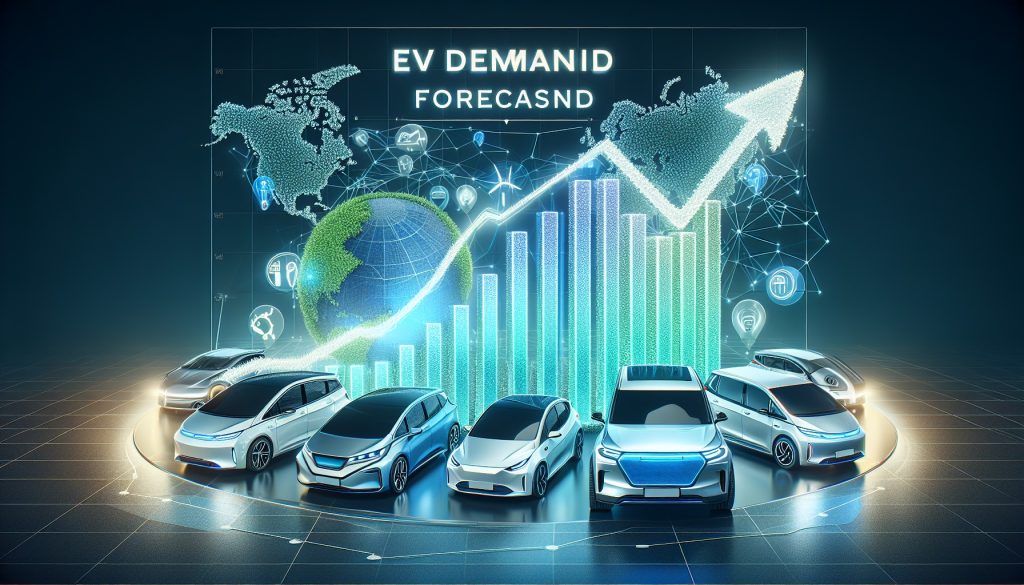
The electric vehicle industry has reached an inflection point where accurate demand prediction determines market leadership. Sophisticated EV demand forecast models have evolved from simple trend analysis to complex algorithms that incorporate consumer behavior, policy changes, technological advancement, and economic indicators. These predictive tools are now the backbone of strategic decision-making across the entire automotive ecosystem.
Modern EV demand forecast methodologies leverage machine learning algorithms that process vast datasets including charging infrastructure deployment rates, battery cost trajectories, government incentive programs, and regional adoption patterns. Major automakers like Tesla, Volkswagen, and General Motors rely on these forecasts to allocate billions in manufacturing investments, determine production capacity, and optimize global supply chain operations. The accuracy of these predictions has dramatically improved, with leading models now achieving 85-90% precision rates over 24-month periods.
Supply chain optimization represents perhaps the most critical application of EV demand forecast intelligence. Lithium, cobalt, and rare earth mineral suppliers use these projections to secure mining rights and expand processing facilities years in advance. Battery manufacturers like CATL and LG Energy Solution base their gigafactory construction timelines on sophisticated demand models that predict not just overall EV adoption but specific battery chemistry requirements across different vehicle segments and geographic regions.
Investment Markets Reshape Around Forecast Intelligence
Financial markets have become increasingly dependent on EV demand forecast accuracy to evaluate investment opportunities and risk profiles. Private equity firms specializing in mobility investments now employ dedicated teams of data scientists to validate manufacturer projections and identify market gaps. The forecasting revolution has enabled more precise capital allocation, reducing the speculative volatility that characterized early EV investments.
Venture capital flowing into charging infrastructure startups particularly benefits from granular demand forecasting. These models predict not just how many EVs will be on roads but where they’ll travel, how often they’ll charge, and what power levels they’ll require. Companies like ChargePoint and Electrify America use hyper-local EV demand forecast data to optimize station placement, ensuring maximum utilization rates and return on investment.
Regional governments worldwide have integrated EV demand forecast modeling into policy development and infrastructure planning. Smart city initiatives use these projections to coordinate grid upgrades, parking policy changes, and public transportation electrification timelines. The European Union’s Green Deal implementation relies heavily on member state demand forecasts to allocate funding and set realistic decarbonization targets.
Technology Integration Enhances Forecast Precision
The integration of real-time data streams has revolutionized EV demand forecast accuracy. Connected vehicle telemetry, smartphone mobility patterns, economic sentiment indicators, and even satellite imagery of parking lots contribute to dynamic models that adjust predictions weekly rather than quarterly. This responsiveness proved invaluable during recent economic fluctuations and supply chain disruptions.
Artificial intelligence has enabled EV demand forecast systems to identify subtle behavioral patterns that human analysts might miss. These algorithms detect correlations between seemingly unrelated factors like local gas price volatility, housing market trends, and EV purchase timing. The result is unprecedented forecast granularity that can predict adoption rates down to specific zip codes and demographic segments.
As the EV revolution accelerates, the sophistication and accuracy of demand forecasting continue to evolve. Organizations that master these predictive capabilities gain substantial competitive advantages, while those relying on outdated methodologies risk significant strategic missteps. The future belongs to companies that can not only manufacture excellent electric vehicles but also anticipate exactly when and where consumers will demand them.
