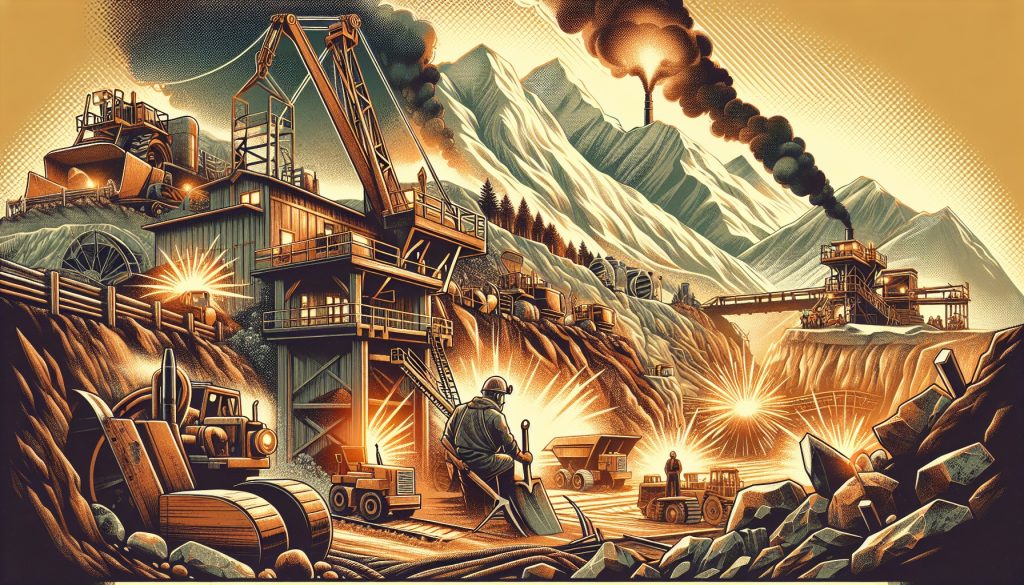
The global lithium industry stands at a pivotal crossroads as hard rock mining expansion fundamentally transforms how the world sources this critical battery metal. While traditional brine extraction has dominated lithium production for decades, a dramatic shift toward spodumene mining from hard rock deposits is rewriting the industry playbook and creating new geopolitical dynamics in the clean energy transition.
This transformation represents far more than a simple diversification of extraction methods. Hard rock mining expansion is delivering lithium supplies from entirely new geographic regions, reducing dependence on the traditional “lithium triangle” of Chile, Argentina, and Bolivia. Australia has emerged as the world’s largest lithium producer through its hard rock operations, while significant spodumene projects in Canada, Zimbabwe, and Brazil are adding substantial capacity to global markets.
The technical advantages of hard rock lithium extraction are reshaping production timelines across the industry. Unlike brine operations that require 12-18 months of evaporation processes, hard rock mining can process spodumene ore into lithium compounds within weeks. This speed advantage has proven crucial as electric vehicle manufacturers and battery producers demand more predictable supply chains to meet rapidly growing demand.
Mining companies are investing unprecedented capital into hard rock mining expansion projects worldwide. Recent data shows that over 70% of new lithium projects entering development phases utilize hard rock extraction methods, representing a complete reversal from historical patterns. These investments are driven by both the technical reliability of hard rock processing and the geographical advantages of accessing lithium deposits in politically stable jurisdictions.
The economic implications of this shift extend beyond simple production metrics. Hard rock mining expansion typically requires higher upfront capital investment compared to brine operations, but offers greater operational predictability and faster ramp-up periods. Processing facilities can achieve full production capacity within months rather than years, providing mining companies with quicker returns on investment and more responsive supply capabilities.
Environmental considerations are also influencing the acceleration of hard rock mining expansion. While traditional concerns about mining operations remain valid, hard rock extraction uses significantly less water than brine evaporation processes and can be conducted with more precise environmental controls. Modern spodumene operations incorporate advanced waste management and land rehabilitation protocols that address many sustainability concerns raised by environmental groups and local communities.
The geopolitical ramifications of hard rock mining expansion cannot be understated. Countries previously excluded from lithium production are rapidly becoming major players in global supply chains. This geographic diversification reduces supply chain risks for battery manufacturers and electric vehicle companies, while creating new economic opportunities for mining-friendly jurisdictions seeking to participate in the clean energy economy.
Processing infrastructure development has accelerated alongside hard rock mining expansion, with new conversion facilities being constructed closer to mining operations. This vertical integration trend reduces transportation costs and supply chain complexity while improving the economics of hard rock lithium production. Several major projects now incorporate both mining and processing operations at single locations, streamlining the pathway from raw ore to battery-grade lithium compounds.
Market analysts project that hard rock mining expansion will continue accelerating as lithium demand growth outpaces the capacity of existing brine operations to expand. The combination of faster development timelines, improved processing technology, and expanded geographic reach positions hard rock extraction as the dominant growth driver for global lithium supply through the remainder of this decade and beyond, fundamentally reshaping an industry that has remained relatively static for generations.