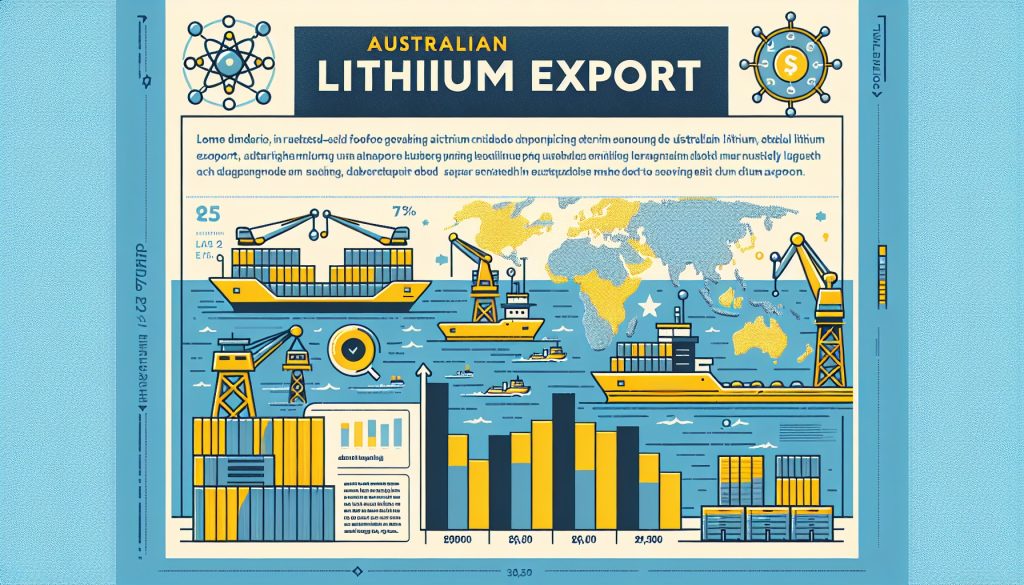
Australia’s position as the world’s largest lithium producer has never been more critical, with the nation’s mines delivering unprecedented volumes to feed the global energy transition. As electric vehicle adoption accelerates and renewable energy storage demands intensify, Australian lithium export operations are responding with remarkable scale and efficiency that continues to reshape international commodity markets.
The Pilbara region remains the epicenter of this lithium revolution, where sprawling operations from industry giants like Pilbara Minerals, Mineral Resources, and Core Lithium are pushing production boundaries. These operations have collectively transformed Australia into a lithium superpower, controlling approximately 55% of global lithium production and establishing the country as an indispensable supplier to battery manufacturers across Asia, Europe, and North America.
Recent market dynamics have created both opportunities and challenges for Australian lithium export companies. While prices experienced volatility following the initial electric vehicle boom, demand fundamentals remain exceptionally strong. China continues to dominate as the primary destination for Australian spodumene concentrate, with Chinese lithium processing facilities converting the raw material into battery-grade lithium compounds that eventually power millions of electric vehicles and energy storage systems worldwide.
The strategic importance of Australian lithium export extends far beyond simple commodity trading. Western governments increasingly view Australia’s lithium resources as critical to reducing dependence on Chinese battery supply chains. This geopolitical dimension has sparked significant investment in downstream processing capabilities, with several major projects aimed at producing battery-grade lithium hydroxide and carbonate directly on Australian soil.
Infrastructure and Technological Advances Accelerating Export Growth
Port infrastructure developments across Western Australia have been crucial in supporting the massive scale of Australian lithium export operations. The Port of Fremantle and Port Hedland have invested heavily in specialized handling equipment and storage facilities designed specifically for lithium concentrate shipments. These upgrades have dramatically reduced logistics costs and improved delivery reliability, making Australian suppliers even more competitive in global markets.
Technological innovations in mining and processing techniques have also contributed to Australia’s export success. Direct shipping ore (DSO) operations have become increasingly sophisticated, with automated sorting systems and real-time quality control ensuring that Australian lithium export products meet the exacting specifications demanded by international customers. These advances have helped Australian producers maintain premium pricing despite intense competition from emerging lithium regions in South America and Africa.
Environmental and social governance considerations are increasingly influencing Australian lithium export strategies. Leading producers have implemented comprehensive sustainability programs covering water management, biodiversity protection, and community engagement. These initiatives not only address regulatory requirements but also appeal to international customers who face growing pressure to ensure their supply chains meet strict environmental and social standards.
Market Outlook and Strategic Positioning
Forward-looking analysis suggests Australian lithium export volumes will continue expanding through the remainder of the decade. Multiple expansion projects across the Pilbara are scheduled for completion, potentially adding several hundred thousand tonnes of annual lithium concentrate production capacity. This expansion comes at a crucial time, as global lithium demand projections indicate potential supply shortages despite new projects coming online worldwide.
The development of lithium refining capabilities within Australia represents a significant strategic shift for the industry. Rather than simply exporting raw spodumene concentrate, Australian companies are increasingly investing in value-added processing facilities that produce battery-grade chemicals. This vertical integration strategy promises to capture greater value from the country’s abundant lithium resources while reducing reliance on overseas processing capacity.
As the global energy transition accelerates and battery technology continues advancing, Australia’s lithium export industry stands at the forefront of one of the most transformative economic shifts in modern history. With unparalleled resource endowments, world-class mining expertise, and strategic geographic positioning, Australian lithium producers are well-positioned to maintain their dominant role in supplying the raw materials that will power the clean energy future. The success of Australian lithium export operations will ultimately determine how quickly and efficiently the world can transition away from fossil fuels toward sustainable energy systems.